







- Site Navigation -
NEWS LIST
Adjustable U-Head Jack in Scaffolding Formwork
Author:yicheng Date:2026-06-24 19:56:39 Hits:98

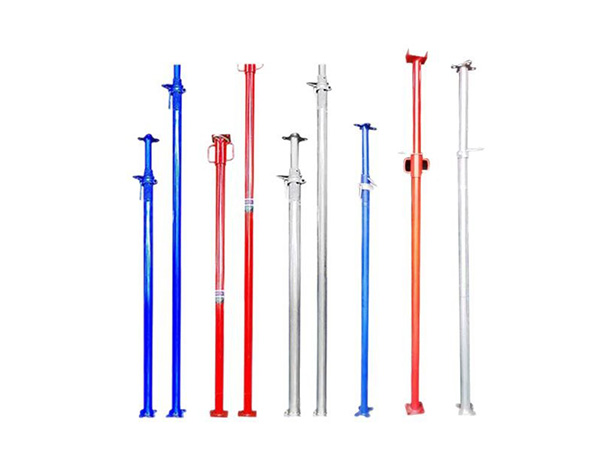
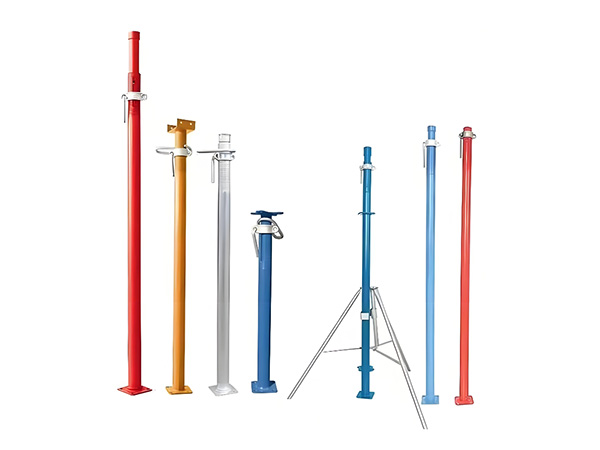
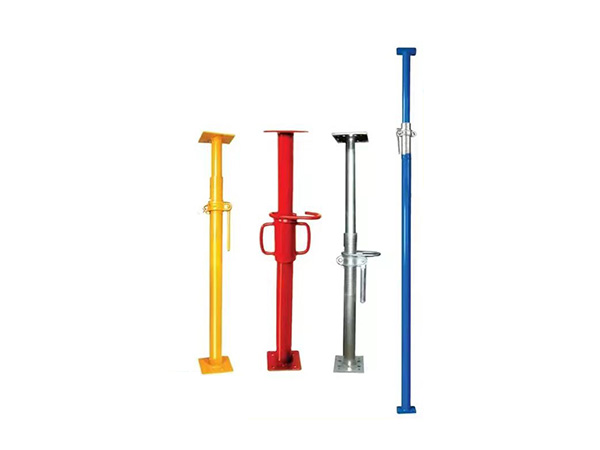
Adjustable U-head jacks sit at the top of scaffold standards or props, forming the connection point between vertical support members and the horizontal beams or slab soffits they bear. Without them, transferring load from a concrete slab or steel beam down through the scaffolding frame would require custom-fabricated connectors for every project—a time-consuming and expensive approach. A properly specified U-head jack from an experienced manufacturer gives contractors a standardized, adjustable solution that works across a wide range of slab depths and beam sizes. This article walks through how U-head jacks work, where they are used, and what to look for when choosing a U-head jack supplier.
How U-Head Jacks Work
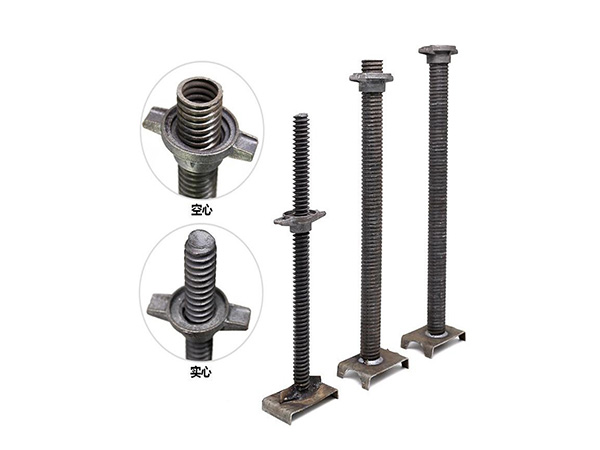
A U-head jack consists of a threaded shaft—similar to the screw mechanism in an adjustable screw jack—mounted on a U-shaped steel head at the top. The U shape cradles the horizontal bearer or beam, and the threaded shaft allows fine height adjustments by turning it up or down. This adjustability is what makes the component so practical on site: construction tolerances mean that the actual elevation of a slab soffit or beam bottom is rarely exactly what the drawings show, and the screw adjustment compensates for those small differences without requiring custom parts.
The U-head itself is welded to the top of the threaded shaft. In most systems, the U-head opening is sized to accept standard timber or steel bearers, typically ranging from 75 mm to 125 mm wide. Some manufacturers offer deeper U-heads for heavier steel beams, and others provide removable pins or bolt holes for securing the bearer against lateral displacement. The quality of the weld between the U-head and the shaft is a critical load-bearing detail—a defect at this joint can lead to sudden failure under load, which is why sourcing from a manufacturer with documented weld testing procedures matters.
Key Applications in Construction
U-head jacks appear most frequently in slab formwork systems, where they support the bearers that in turn carry the formwork panels or tables. On flat slab projects, U-head jacks on the perimeter scaffolding transfer slab edge loads down through the standards to the ground. In beam and slab construction, they support the beam bottoms at intermediate points along the span, allowing the beam formwork to be struck and reshored in a controlled sequence. High-rise projects use U-head jacks in combination with other adjustable props in multi-tier reshoring sequences, where multiple rows of supports at different levels gradually transfer construction loads from newly poured slabs down to completed floors.
U-head jacks also see use in temporary works applications beyond conventional formwork—shoring for temporary bridges during repair work, support frames for large mechanical equipment during installation, and even event staging where loads need to be distributed over irregular surfaces. In every case, the principle is the same: a standardized, adjustable bearing point that can be set to the required height and locked off securely before load is applied.
Load Capacity and Sizing Considerations
U-head jacks are rated by their axial load capacity—the maximum compressive force they can carry through the threaded shaft before buckling or yielding becomes a risk. Ratings vary by manufacturer and by the shaft diameter and wall thickness of the jack. Light-duty jacks might carry 15 to 30 kN, while heavy-duty versions can exceed 50 kN or more. Matching the jack rating to the calculated loads is not optional—it is one of the most basic requirements for safe temporary works design.
Bracing arrangements on the scaffolding frame also influence the effective capacity of U-head jacks. An unbraced standard with a U-head jack at the top is far more susceptible to buckling than one that is tied into a properly braced bay. Engineers specifying these systems need to account for both the bare jack capacity and the overall frame stiffness when calculating safe working loads.
Quality, Testing, and Selecting a Supplier
Reputable manufacturers subject U-head jacks to compression testing to verify their rated capacity, usually as part of a batch testing protocol applied to samples from each production run. Material certifications for the steel used in the shaft and U-head should be available on request, confirming that the material meets the specified grade and minimum yield strength. Dimensional inspection—checking that the U-head opening width, shaft diameter, and thread pitch all fall within tolerances—ensures that jacks from the supplier will interchange correctly with other components in the system.
Thread quality is another detail that separates good manufacturers from the rest. Stripped or poorly rolled threads cause binding during adjustment and reduce the effective engagement length of the screw, which weakens the jack. A professional factory produces threads to tight tolerances using precision rolling or machining processes, resulting in smooth operation throughout the adjustment range. Before committing to a supplier for a large project, requesting a sample jack to test for smooth adjustment and good weld integrity is a straightforward way to verify quality.
Join Our Global Distributor Network
References
British Standards Institution. (2015). BS EN 1065: Adjustable Steel Props — Product Characteristics, Testing and Verification. BSI.
Health and Safety Executive. (2016). Simple Guide to the Construction (Design and Management) Regulations 2015. HSE Books.
Nicholson, H. P. (2019). Temporary Works: Principles of Design and Construction (3rd ed.). Thomas Telford Ltd.

Contact Us
Tel:+86-15831733891
E-mail:yichengbuildingmaterials@gmail.com
Add:100 meters south of Weicun Village, Hechengjie Town, Xian County, Cangzhou City, Hebei Province
Url:https://www.yc-buildingmaterials.com