







- Site Navigation -
NEWS LIST
Anti-Corrosion Technologies Used in Modern Couplers
Author:yicheng Date:2026-01-16 17:36:57 Hits:191
Why Anti-Corrosion Matters for Coupler Performance
A coupler is a critical mechanical component used to connect shafts, pipes, or structural elements in construction, industrial equipment, and infrastructure systems. In real-world environments, couplers are frequently exposed to moisture, chemicals, temperature fluctuations, and mechanical stress. Without proper protection, corrosion can significantly reduce the strength, accuracy, and lifespan of a coupler.
To meet modern engineering requirements, manufacturers increasingly integrate anti-corrosion technologies directly into coupler design and production. These technologies not only extend service life but also reduce maintenance costs and improve reliability in demanding applications. Understanding how anti-corrosion solutions are applied to modern couplers helps engineers and procurement teams select components suitable for long-term, large-scale use.
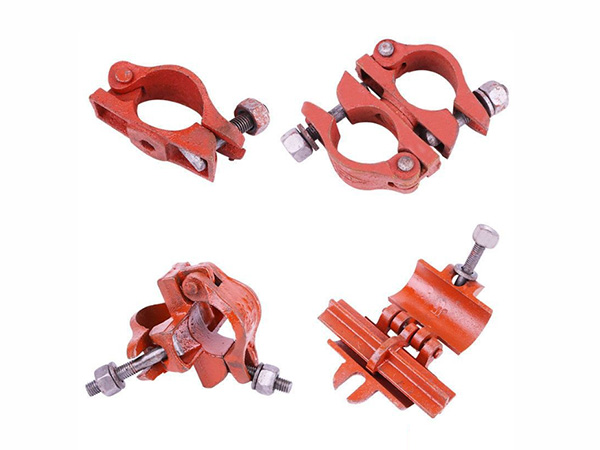
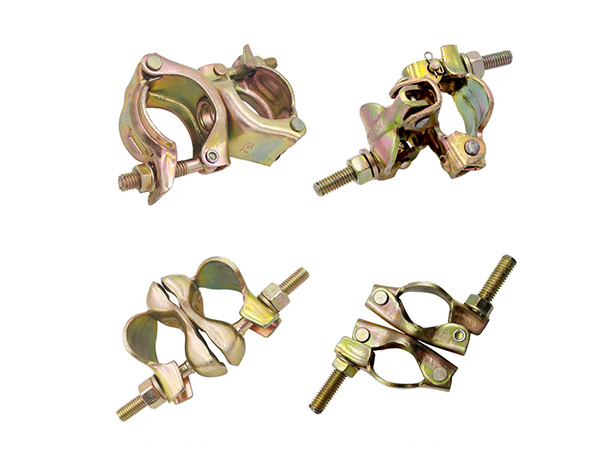
Common Corrosion Challenges Faced by Couplers
Couplers operate in a wide range of environments, from indoor machinery systems to outdoor construction sites and marine or chemical settings. Common corrosion challenges include:
·Exposure to humidity and water
·Contact with corrosive chemicals or salt
·Galvanic corrosion between dissimilar metals
·Wear-related surface damage that accelerates oxidation
Because couplers often serve as load-bearing or precision-alignment components, even minor corrosion can compromise system performance. This makes corrosion resistance a key consideration during both design and production stages.
Material Selection as the First Line of Defense
One of the most fundamental anti-corrosion strategies used in modern couplers is proper material selection. Different materials offer varying levels of corrosion resistance depending on the operating environment.
Carbon steel couplers are commonly used due to their strength and cost efficiency, but they require additional surface protection. Stainless steel couplers provide improved resistance to oxidation and chemical exposure, making them suitable for harsh environments. In some cases, alloy steels are selected to balance mechanical performance and corrosion resistance.
From a manufacturing perspective, consistent material sourcing and controlled production processes are essential to ensure stable performance in bulk supply scenarios.
Surface Coating Technologies for Couplers
Surface coatings are among the most widely used anti-corrosion technologies in coupler production. These coatings act as a physical barrier between the metal surface and the surrounding environment.
Zinc Plating and Galvanization
Zinc-based coatings protect couplers by sacrificing themselves to corrosion before the base metal is affected. Galvanized couplers are commonly used in construction and outdoor applications due to their durability and cost-effectiveness.
Electroplating and Chemical Coatings
Electroplated coatings provide uniform coverage and improved surface finish. Chemical conversion coatings, such as phosphating, enhance corrosion resistance while improving paint adhesion.
These methods are well-suited to mass production, allowing manufacturers to maintain consistent quality across large batches of couplers.
Powder Coating for Enhanced Protection
Powder coating is increasingly used for modern couplers that require both corrosion resistance and aesthetic consistency. The coating forms a thick, uniform layer that resists moisture, abrasion, and chemical exposure.
Compared to traditional liquid paints, powder coating offers better durability and environmental performance. It is commonly applied to couplers used in construction systems, scaffolding connections, and structural assemblies.
Heat Treatment and Surface Hardening
Although primarily used to improve mechanical strength, heat treatment and surface hardening processes can also contribute to corrosion resistance. By refining the microstructure of the metal, these processes reduce surface defects where corrosion typically begins.
When combined with protective coatings, heat-treated couplers demonstrate improved resistance to both mechanical wear and environmental degradation.
Design Optimization to Reduce Corrosion Risk
Anti-corrosion performance is not determined by materials and coatings alone. Coupler design also plays an important role.
Design features such as smooth transitions, reduced crevices, and proper drainage paths minimize areas where moisture and contaminants can accumulate. Precision machining during production ensures tight tolerances, reducing fretting corrosion caused by micro-movements between connected components.
Well-designed couplers are easier to protect, inspect, and maintain throughout their service life.
Quality Control in Coupler Production
For manufacturers supplying couplers in large volumes, consistent quality control is essential. Anti-corrosion performance must be verified through surface inspection, coating thickness measurement, and corrosion testing methods such as salt spray testing.
Stable production systems ensure that every coupler meets the same corrosion resistance standards, which is especially important for bulk supply to construction and industrial projects.
Applications Requiring High Corrosion Resistance
Modern couplers with advanced anti-corrosion technologies are widely used in:
·Construction and scaffolding systems
·Industrial machinery and power transmission
·Infrastructure and transportation projects
·Outdoor and high-humidity environments
In these applications, long-term reliability and reduced maintenance are critical factors influencing component selection.
Conclusion: Anti-Corrosion Technology as a Key Value of Modern Couplers
A coupler is far more than a simple connecting component—it is a critical element that directly affects system safety and durability. Modern anti-corrosion technologies, including material optimization, surface coatings, powder coating, and design improvements, significantly enhance coupler performance in demanding environments.
For projects requiring consistent quality and long service life, selecting couplers produced through controlled manufacturing processes and designed for corrosion resistance is essential. As construction and industrial systems continue to evolve, anti-corrosion technology will remain a core factor in the reliable production and bulk supply of modern couplers.
References
GB/T 7714:Silman H. Corrosion and Corrosion Control: An introduction to corrosion science and engineering[J]. 1972.
MLA:Silman, H. "Corrosion and Corrosion Control: An introduction to corrosion science and engineering." (1972): 98-98.
APA:Silman, H. (1972). Corrosion and Corrosion Control: An introduction to corrosion science and engineering.

Contact Us
Tel:+86-15831733891
E-mail:yichengbuildingmaterials@gmail.com
Add:100 meters south of Weicun Village, Hechengjie Town, Xian County, Cangzhou City, Hebei Province
Url:https://www.yc-buildingmaterials.com