







- Site Navigation -
NEWS LIST
Complete Guide to Tie Rod System in Concrete Formwork
Author:yicheng Date:2026-02-11 10:21:24 Hits:171
Why Tie Rod System Matters in Concrete Formwork
In modern concrete construction, accuracy, safety, and efficiency are essential. One of the most important components ensuring formwork stability is the Tie Rod System. It connects opposing formwork panels, resists concrete pressure, and maintains correct wall thickness during pouring.
With professional manufacturer-controlled production and standardized factory manufacturing processes, today’s Tie Rod System components are produced with high dimensional accuracy and stable mechanical properties, allowing reliable batch supply for large-scale construction projects.
From residential buildings to infrastructure and industrial facilities, the Tie Rod System plays a key role in shaping concrete structures safely and efficiently.
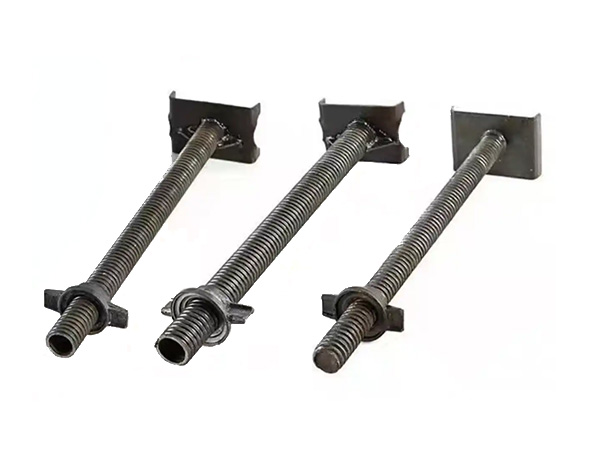
What Is a Tie Rod System?
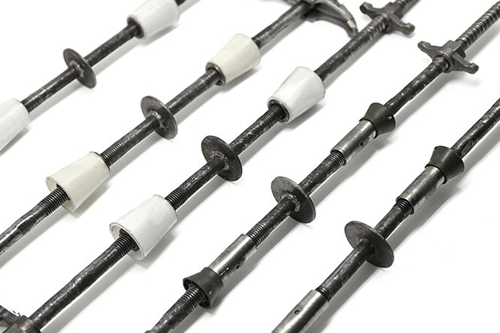
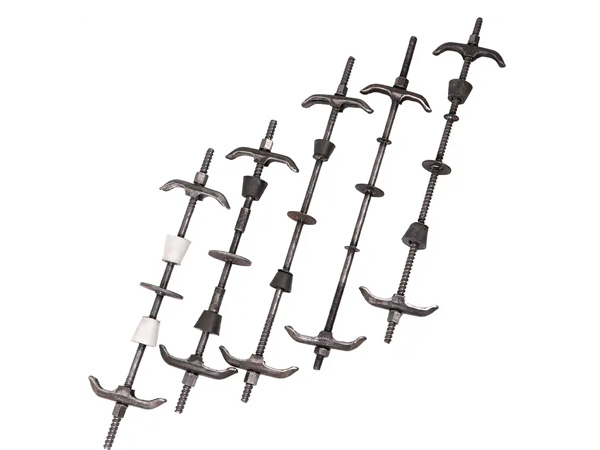
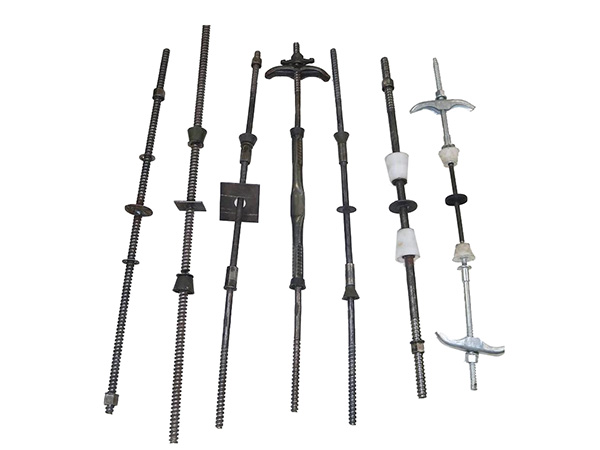
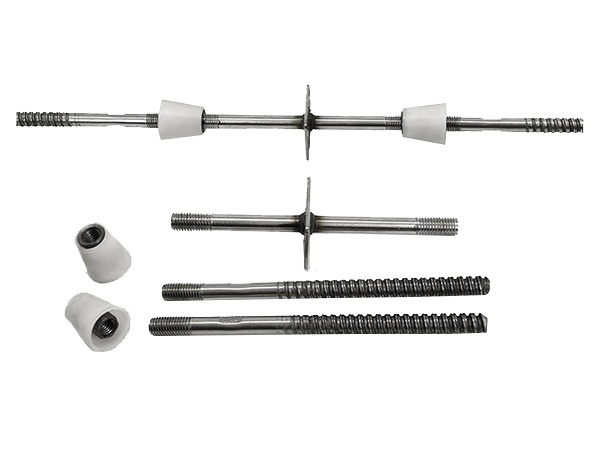
A Tie Rod System is a formwork anchoring assembly used to hold concrete form panels together during casting. It typically includes tie rods, wing nuts, water stops, cones, washers, and sleeves that work together to resist the lateral pressure of fresh concrete.
During factory production, tie rods are manufactured using precision rolling, heat treatment, and surface coating to ensure consistent strength and corrosion resistance. Manufacturer production control ensures each component performs predictably under load.
This system prevents formwork from spreading, leaking, or deforming when concrete is poured.
Structural Function in Formwork Stability
Fresh concrete generates significant lateral pressure against form panels. The Tie Rod System transfers this pressure across the wall section, keeping both sides aligned.
Its main functions include:
·Maintaining correct wall thickness
·Preventing panel displacement
·Controlling deformation
·Improving surface quality
·Enhancing jobsite safety
Without a properly designed Tie Rod System, formwork may bulge, crack, or fail, leading to material waste and safety hazards. Factory-produced systems ensure uniform performance across large projects.
Load Mechanism and Pressure Control
The load-bearing mechanism of the Tie Rod System is based on tension.
As concrete is poured, pressure pushes outward on the form panels. Tie rods resist this force in tension, transferring loads through washers and nuts into the formwork frames.
Precision threads produced in factory manufacturing improve contact area and reduce stress concentration. Manufacturer testing verifies tensile capacity so that each Tie Rod System can safely withstand real construction loads.
Material Selection and Durability
Material quality is critical for Tie Rod System performance.
Most tie rods are made from carbon steel or alloy steel, offering high tensile strength and ductility. Surface treatments such as galvanizing or coating enhance corrosion resistance, especially for wet and aggressive construction environments.
During production, manufacturers control raw material sourcing and finishing processes to ensure consistent durability and long service life for batch-supplied Tie Rod System components.
Installation Efficiency and Accuracy
The Tie Rod System also improves construction efficiency.
Standardized components from factory production allow faster assembly and disassembly. Workers can position rods, tighten nuts, and align panels with minimal adjustment.
Accurate manufacturing tolerances reduce site errors and ensure uniform wall thickness across long formwork runs. Manufacturer batch supply further supports continuous construction schedules without interruption.
Design Flexibility for Different Projects
Concrete formwork varies widely between projects. The Tie Rod System offers flexibility through customizable lengths, diameters, thread types, and accessories.
Whether used for retaining walls, foundations, columns, or shear walls, manufacturers can adapt production specifications to meet different load and spacing requirements.
Factory production supports both standard and customized Tie Rod System solutions while maintaining batch consistency and quality control.
Factory Production Advantages
Choosing a professional Tie Rod System Manufacturer offers clear benefits for project performance and cost control.
Typical factory production processes include:
·Thread rolling and machining
·Heat treatment
·Surface coating
·Dimensional inspection
·Tensile testing
·Packaging for bulk delivery
These steps ensure that every Tie Rod System component meets engineering requirements before shipment. Factory batch production enables large-volume supply for infrastructure, commercial, and industrial construction projects.
Safety and Quality Control
Safety depends heavily on product consistency.
Manufacturers apply quality control systems to inspect thread geometry, straightness, coating thickness, and load capacity. Factory testing simulates real tension conditions to verify performance.
Reliable Tie Rod System production reduces risks of sudden failure, leakage, and formwork collapse during concrete pouring operations.
Applications of Tie Rod System
The Tie Rod System is widely used in:
·Concrete walls and columns
·Bridge substructures
·Basement and foundation works
·Retaining walls
·Infrastructure construction
·Industrial building projects
Thanks to manufacturer production and factory batch supply, Tie Rod Systems can be delivered in large quantities for demanding construction schedules.
Sustainability and Long-Term Value
Sustainability is increasingly important in construction. Tie Rod System components are reusable and recyclable, reducing waste over multiple projects.
Factory production minimizes scrap and improves material utilization. Durable coatings extend service life, lowering replacement frequency and environmental impact.
By combining engineering efficiency with production optimization, the Tie Rod System supports both economic and ecological construction goals.
Future Development of Tie Rod System Technology
As construction becomes more industrialized, Tie Rod System manufacturing continues to evolve.
Factories are introducing automated machining, digital inspection, and advanced surface treatments to improve precision and consistency. These innovations support higher load capacity and longer service life.
With growing urban development and infrastructure investment, demand for reliable Tie Rod System solutions will continue to expand globally.
Conclusion: Choosing Reliable Tie Rod System for Formwork Success
The Tie Rod System is a fundamental element in concrete formwork, providing stability, load control, accuracy, and safety during casting operations.
By working with a professional Tie Rod System Manufacturer supported by factory production and bulk supply capability, contractors and engineers gain consistent quality, predictable performance, and efficient delivery for large-scale projects.
Whether for residential, commercial, or infrastructure construction, the Tie Rod System remains an essential solution for modern concrete formwork systems.
References
GB/T 7714:Diaconu R, Petruse R, Brindasu P D. Formwork application optimization by using augmented reality[C]//IOP Conference Series: Materials Science and Engineering. IOP Publishing, 2016, 161(1): 012043.
MLA:Diaconu, R., R. Petruse, and P. D. Brindasu. "Formwork application optimization by using augmented reality." IOP Conference Series: Materials Science and Engineering. Vol. 161. No. 1. IOP Publishing, 2016.
APA:Diaconu, R., Petruse, R., & Brindasu, P. D. (2016, November). Formwork application optimization by using augmented reality. In IOP Conference Series: Materials Science and Engineering (Vol. 161, No. 1, p. 012043). IOP Publishing.

Contact Us
Tel:+86-15831733891
E-mail:yichengbuildingmaterials@gmail.com
Add:100 meters south of Weicun Village, Hechengjie Town, Xian County, Cangzhou City, Hebei Province
Url:https://www.yc-buildingmaterials.com