







- Site Navigation -
NEWS LIST
Cuplock Scaffolding System Features and Applications
Author:yicheng Date:2026-05-22 15:51:55 Hits:129

Cuplock scaffolding stands as one of the most widely used modular scaffolding systems globally, valued for its simple yet effective nodal connection design. The cup-and-blade connection enables rapid, tool-free assembly while providing excellent structural rigidity. This system serves diverse applications from building construction to industrial maintenance and heavy shoring.

Cuplock Connection Mechanism
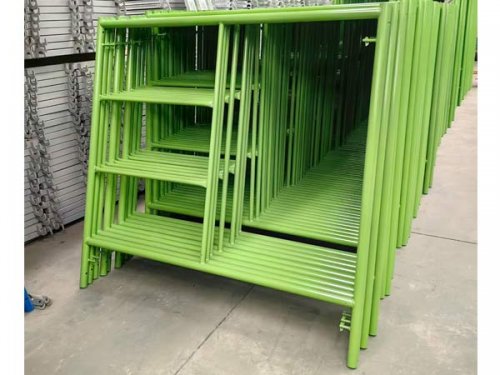
The cuplock system uses fixed lower cups welded to vertical standards at 500mm intervals and sliding upper cups that lock horizontal ledger blades into position. To assemble, ledger blades drop into the lower cup, then the upper cup slides down and rotates to lock all connected components simultaneously. A single hammer tap secures the connection.
Professional cuplock scaffolding manufacturers precision-weld lower cups using automated fixtures that ensure consistent positioning and orientation. This manufacturing consistency enables components from different production batches to interchange seamlessly—a critical requirement for rental fleets and large projects.
Component Range and System Flexibility
Cuplock systems offer comprehensive component ranges including standards in various lengths, ledgers with different bay widths, diagonal braces for stability, steel decking for working platforms, and specialty components like stairways and cantilever brackets. This component variety supports virtually any scaffold configuration.
Leading modular scaffolding suppliers maintain extensive inventories and can provide custom components for unusual configurations. Their engineering teams develop specialized solutions for applications like circular structures, bridge formwork support, and heavy industrial maintenance access.
Load Capacity and Shoring Applications
Cuplock systems deliver substantial load capacity that makes them suitable for both access scaffolding and heavy shoring applications. Standard configurations support working loads of 3-6 kN/m² for access applications. When configured as shoring towers with appropriate bracing, cuplock systems support formwork loads for substantial concrete placements.
Experienced shoring system manufacturers provide detailed load capacity data for various tower configurations, including permissible axial loads on individual standards and total tower capacity. They also offer design assistance for complex shoring layouts where multiple towers support continuous formwork systems.
Assembly Efficiency Advantages
Cuplock assembly speeds significantly exceed traditional tube-and-coupler methods. The top-cup locking mechanism secures up to four ledgers simultaneously, reducing connection operations by 60-70% compared to individual coupler tightening. Experienced crews erect 40-60% faster than conventional scaffolding, reducing labor costs and project timelines.
Quality-focused scaffolding factories design their cuplock components with smooth sliding action, positive locking engagement, and visual indicators that confirm proper assembly. These design features help crews assemble correctly even under time pressure or adverse weather conditions.
Galvanizing and Component Durability
Hot-dip galvanizing provides the gold standard for cuplock component corrosion protection. Galvanized components withstand years of outdoor storage, site exposure, and rough handling without significant degradation. This durability translates directly into lower replacement costs and higher return on investment for scaffolding rental companies and contractors.
Reputable galvanized scaffolding suppliers apply zinc coatings meeting ISO 1461 requirements, with regular quality testing ensuring consistent coating thickness and adhesion across production batches. They also offer repair and re-galvanizing services for components showing wear after extended service.
Safety Features and Compliance
Cuplock systems incorporate engineered safety features including self-locking connections that resist accidental disconnection, integrated guardrail and toeboard attachment points, and standardized stairway modules providing safe access between scaffold levels. These features simplify compliance with workplace safety regulations.
Established scaffolding safety equipment suppliers design their cuplock systems to meet international standards including EN 12810/12811 and OSHA requirements. They provide compliance documentation and technical support for regulatory submissions and site safety planning.
Making Informed System Selection Decisions
Selecting cuplock scaffolding requires evaluating load requirements, assembly efficiency needs, component reusability expectations, and compatibility with existing equipment inventories. Engage experienced suppliers who can demonstrate system features, provide product samples for evaluation, and offer technical support for your specific applications.
The cuplock scaffolding system delivers proven performance across construction, industrial, and shoring applications worldwide. By understanding system capabilities and partnering with knowledgeable suppliers, contractors can implement scaffolding solutions that enhance productivity, safety, and return on investment.
References
European Committee for Standardization (CEN) - EN 12810/12811: Façade Scaffolds Performance Requirements
Occupational Safety and Health Administration (OSHA) - Scaffolding Safety Standards 1926.451
British Standards Institution (BSI) - BS 1139: Metal Scaffolding Specifications

Contact Us
Tel:+86-15831733891
E-mail:yichengbuildingmaterials@gmail.com
Add:100 meters south of Weicun Village, Hechengjie Town, Xian County, Cangzhou City, Hebei Province
Url:https://www.yc-buildingmaterials.com