







- Site Navigation -
NEWS LIST
Load Capacity Basics: How Strong Is an Adjustable Screw Jack?
Author:yicheng Date:2026-02-07 10:12:04 Hits:84
Why Adjustable Screw Jack Strength Matters
In construction, industrial maintenance, and structural support projects, understanding load capacity is critical. One of the most widely used tools for temporary and adjustable load bearing is the Adjustable Screw Jack. These devices provide precise height adjustment while safely transferring loads from structures to the ground.
With professional manufacturer-controlled production and standardized factory manufacturing processes, modern Adjustable Screw Jacks are produced with consistent dimensions, stable materials, and reliable performance, allowing batch supply for large engineering projects.
Knowing how strong an Adjustable Screw Jack is helps engineers, contractors, and site managers ensure safety, efficiency, and long-term reliability during lifting and supporting operations.
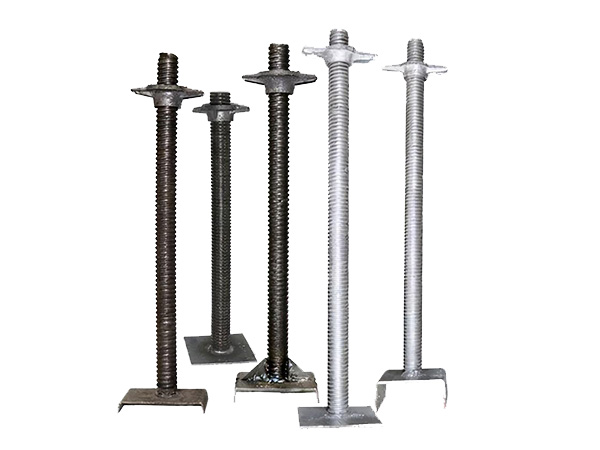
What Is an Adjustable Screw Jack?
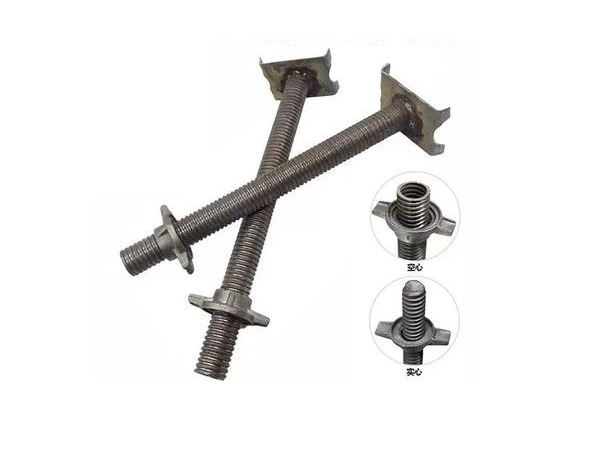
An Adjustable Screw Jack is a mechanical support device that uses a threaded rod and base assembly to lift, position, or support loads. By rotating the screw, users can finely adjust height while maintaining load stability.
Factory production typically involves precision machining of threads, controlled welding of bases and plates, and surface treatments for corrosion resistance. These processes ensure that Adjustable Screw Jacks perform consistently under load.
They are commonly used in scaffolding systems, formwork support, machinery leveling, structural shoring, and bridge maintenance.
Understanding Load Capacity Basics
Load capacity refers to the maximum weight an Adjustable Screw Jack can safely carry without failure. This capacity depends on several engineering factors:
·Material strength
·Thread geometry
·Column stability
·Base plate size
·Manufacturing precision
·Installation conditions
Manufacturer production quality ensures that each jack meets specified mechanical properties before leaving the factory. Engineers rely on these specifications to select the correct Adjustable Screw Jack for each application.
How Adjustable Screw Jack Carries Load
The load-bearing mechanism of an Adjustable Screw Jack is based on axial compression through the threaded shaft.
When a load is applied, the force travels from the supported structure into the top plate, down the screw thread, through the nut or sleeve, and finally into the base plate and ground.
Factory-produced threads distribute stress evenly along the contact surface. Precision machining improves engagement between threads, reducing localized stress and extending service life. This controlled load path is why Adjustable Screw Jacks are reliable in temporary and adjustable support systems.
Material Strength and Structural Performance
Material selection plays a major role in how strong an Adjustable Screw Jack can be.
Most jacks are manufactured from carbon steel or alloy steel for high compressive strength and durability. Heat treatment improves hardness and toughness, while surface coatings protect against corrosion.
During factory production, materials undergo inspection to ensure consistent yield strength and dimensional stability. Manufacturer control over material sourcing and processing allows batch supply of Adjustable Screw Jacks with predictable performance.
Stability, Buckling, and Safety Factors
Beyond material strength, stability determines real load capacity.
An Adjustable Screw Jack behaves like a column under compression. If extended too far, it becomes slender and more prone to buckling. Engineers account for:
·Effective length
·Diameter of the screw
·Support conditions
·Alignment accuracy
Factory guidelines typically limit maximum extension to maintain safety margins. Manufacturer production testing verifies that Adjustable Screw Jacks maintain structural stability within specified working ranges.
Thread Design and Load Distribution
The thread is the heart of the Adjustable Screw Jack.
Thread profile, pitch, and surface finish influence how loads are distributed along the shaft. Fine, well-machined threads increase contact area and reduce stress concentration.
Factory machining and rolling processes improve thread consistency and fatigue resistance. This ensures that repeated loading does not quickly degrade the Adjustable Screw Jack, making it suitable for long-term site use and repeated adjustment cycles.
Installation Conditions and Real-World Performance
Even a strong Adjustable Screw Jack can underperform if installed improperly.
Key installation considerations include:
·Level ground or base plate support
·Vertical alignment
·Uniform load distribution
·Avoiding eccentric loading
·Preventing vibration or impact loading
Manufacturer documentation often includes recommended installation methods based on factory testing. Correct use ensures that Adjustable Screw Jacks reach their intended load capacity safely in real-world applications.
Factory Production Advantages in Adjustable Screw Jack Manufacturing
Choosing a professional Adjustable Screw Jack Manufacturer provides important advantages for large-scale projects.
Factory production systems typically include:
·CNC machining of screws
·Automated welding of bases
·Heat treatment
·Surface coating
·Dimensional inspection
·Load testing
These processes guarantee consistency and reliability. Batch production capacity allows factories to supply Adjustable Screw Jacks in large quantities with uniform performance, which is essential for scaffolding, formwork, and structural support projects.
Applications of Adjustable Screw Jack
Adjustable Screw Jacks are widely used in:
·Scaffolding support systems
·Concrete formwork
·Bridge shoring
·Machinery leveling
·Structural renovation
·Industrial maintenance
Thanks to manufacturer production and factory batch supply, these jacks can be adapted for different load ranges and project scales, supporting both temporary and semi-permanent structural operations.
Improving Safety and Longevity
Long-term performance depends on maintenance and correct use.
Regular inspection of threads, cleaning of debris, and protection from corrosion help maintain load capacity. Factory surface treatments and coatings further extend service life.
By combining good engineering practice with reliable manufacturer production, Adjustable Screw Jacks remain safe and efficient across multiple construction cycles.
Future Trends in Adjustable Screw Jack Technology
As construction becomes more automated, Adjustable Screw Jack production is also evolving.
Factories are adopting precision machining, robotic welding, and digital quality inspection. These innovations improve consistency, reduce defects, and increase load predictability.
With growing infrastructure development, Adjustable Screw Jack systems will continue to be essential tools for modern adjustable load-bearing solutions.
Conclusion: How Strong Is an Adjustable Screw Jack?
The strength of an Adjustable Screw Jack depends on material quality, thread design, stability control, installation conditions, and factory production precision.
By working with a professional Adjustable Screw Jack Manufacturer supported by factory production and bulk supply capability, engineers and contractors gain reliable load capacity, consistent quality, and efficient delivery for large projects.
Whether used in scaffolding, formwork, or structural shoring, the Adjustable Screw Jack remains a powerful and flexible solution for safe adjustable load-bearing in modern construction and industrial engineering.
References
GB/T 7714:Borse N, Chaudhari A, Tadas V, et al. Screw jack mechanism for reducing effort[J]. Int. J. Innov. Sci. Res. Technol, 2024, 9(4): 2958-2968.
MLA:Borse, Nitin, et al. "Screw jack mechanism for reducing effort." Int. J. Innov. Sci. Res. Technol 9.4 (2024): 2958-2968.
APA:Borse, N., Chaudhari, A., Tadas, V., Atole, S., Ghune, S., & Kirte, A. (2024). Screw jack mechanism for reducing effort. Int. J. Innov. Sci. Res. Technol, 9(4), 2958-2968.

Contact Us
Tel:+86-15831733891
E-mail:yichengbuildingmaterials@gmail.com
Add:100 meters south of Weicun Village, Hechengjie Town, Xian County, Cangzhou City, Hebei Province
Url:https://www.yc-buildingmaterials.com