







- Site Navigation -
NEWS LIST
Modular Scaffolding Systems: Cuplock vs Kwickstage Comparison
Author:yicheng Date:2026-08-04 16:03:58 Hits:130
Introduction: Two Pillars of Modular Scaffolding
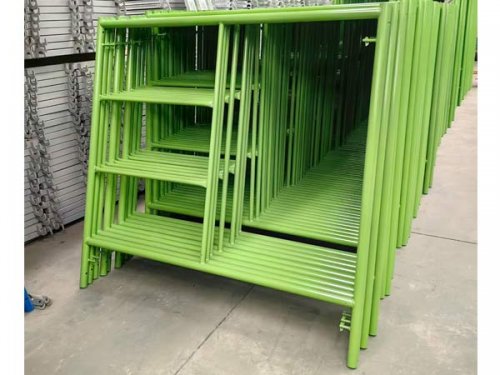
When construction projects demand speed, safety, and structural reliability, modular scaffolding systems have become the default choice over traditional tube-and-fitting methods. Among the many options on the market, two names dominate the conversation: the Cuplock scaffolding system and the Kwickstage scaffolding system. Both belong to the modular family, but they diverge significantly in design philosophy, erection speed, load characteristics, and ideal use cases. For procurement managers and site engineers evaluating suppliers, understanding these differences matters — and choosing the right system can mean the difference between a project that finishes ahead of schedule and one plagued by delays.
At Hebei Yicheng New Building Materials Co., Ltd., we manufacture both systems under one roof. This gives us a unique, factory-side perspective on how each performs in real-world conditions.

What Is the Cuplock Scaffolding System?
The Cuplock system is a node-based modular scaffold that uses a distinctive cup-and-blade locking mechanism. A fixed lower cup is welded to the standard at each lift height, and a sliding upper cup secures ledgers and transoms with a simple hammer blow. No loose parts, no nuts and bolts — just a wedge-tight connection that takes seconds to complete.
This makes Cuplock popular where labour speed is a priority. A skilled crew can assemble it faster than traditional scaffolding, and the system works well for both access and load-bearing shoring. From a factory perspective, Cuplock is straightforward to manufacture and quality-control, keeping supply chains stable. As a modular scaffold supplier, we find Cuplock remains the most requested system for general construction and industrial maintenance across Asia, the Middle East, and Africa.
The British standard BS EN 12810 provides the performance specification for prefabricated façade scaffolds, and Cuplock systems from reputable manufacturers meet these requirements. Safe working loads typically range from 45 kN to 75 kN per standard, depending on configuration and leg spacing.
What Is the Kwickstage Scaffolding System?
Kwickstage uses a wedge-and-bracket connection rather than a cup. Vertical standards come with pre-welded V-pressings or rosette-style brackets at regular intervals, and ledgers are fitted with wedge ends that slot into these brackets and are tapped tight with a hammer.
The key advantage of Kwickstage is versatility in non-standard configurations. Because wedge connections can be made at any face of the standard, the system allows greater layout flexibility — useful on irregular building footprints or curved structures. The wedges create rigid connections that perform well under dynamic loading, and the system is widely used in formwork support, bridge construction, and heavy industrial projects.
Kwickstage tends to offer a slightly higher load capacity per standard than Cuplock in certain configurations, owing to the continuous load path without the cup interruption. However, there are more individual components to track and maintain on site. For a scaffolding manufacturer like Hebei Yicheng, producing Kwickstage requires tighter tolerances and more precise welding jigs, but the investment pays off in system reliability and customer satisfaction. The European standard BS EN 12811 governs temporary works equipment and is the relevant Kwickstage benchmark.
Side-by-Side Comparison: Cuplock vs Kwickstage
Cuplock is faster to erect because the cup mechanism aligns ledgers automatically — horizontal members simply drop into the lower cup before the top cup is hammered down. Kwickstage requires the fitter to align each wedge into its bracket slot, which takes more care per connection. On a large project with thousands of connections, this time difference adds up.
On the other hand, Kwickstage offers better adaptability. Wedges can be placed at various angles around the standard, making it easier to create irregular-shaped scaffolds or work around existing structures. Cuplock is rigidly oriented at 90-degree intervals, which suits rectangular grids but can be limiting for complex geometries.
In terms of logistics, Cuplock has fewer unique part types, simplifying inventory management for both the supplier and the end user. Kwickstage requires a broader parts catalogue, meaning higher initial stock investment. However, its components are generally lighter per piece, which can reduce transport costs and manual handling fatigue on site. Both systems are hot-dip galvanised to BS EN ISO 1461 standards and deliver a service life of ten years or more with proper maintenance.
Choosing the Right System for Your Project
The decision ultimately depends on your project profile. For high-volume, repetitive access scaffolding — residential high-rises, industrial painting, or façade work — Cuplock offers the fastest return on investment through lower labour costs and simpler logistics. For heavy civil works, bridge falsework, or complex structures where layout flexibility matters more than pure speed, Kwickstage is often the better fit.
Many contractors choose to stock both systems. As a full-line scaffolding manufacturer and supplier, Hebei Yicheng supports this approach with factory-direct pricing, mixed-container loading, and consistent quality across batches. We also provide custom hot-dip galvanising, colour-coded components, and OEM packaging. Every batch undergoes load testing and dimensional inspection before dispatch.
The Handbook on Scaffolding published by the Indian Standards Institution provides further reading on comparative system performance. Likewise, BS EN 12810 and BS EN 12811 remain the definitive European benchmarks for design, testing, and safe use.
Join Our Global Distributor Network
References
British Standards Institution. BS EN 12810: Façade Scaffolds Made of Prefabricated Components — Part 1: Products Specifications. BSI, 2003.
British Standards Institution. BS EN 12811: Temporary Works Equipment — Part 1: Scaffolds — Performance Requirements and General Design. BSI, 2003.
Indian Standards Institution. Handbook on Scaffolding — SP:38. ISI, 1980.

Contact Us
Tel:+86-15831733891
E-mail:yichengbuildingmaterials@gmail.com
Add:100 meters south of Weicun Village, Hechengjie Town, Xian County, Cangzhou City, Hebei Province
Url:https://www.yc-buildingmaterials.com