







- Site Navigation -
NEWS LIST
Scaffold Fittings Explained: Essential Components for Safe Scaffolding Systems
Author:yicheng Date:2026-05-05 14:47:44 Hits:72
In the construction industry, safety and structural stability are non-negotiable priorities—particularly when working at elevated heights. Scaffold fittings play an indispensable role in ensuring that scaffolding systems remain secure, adaptable, and capable of supporting both construction workers and construction materials throughout the project. This article explains the definition of scaffold fittings, their key components, and the reasons why they are crucial for building safe and reliable scaffolding systems.
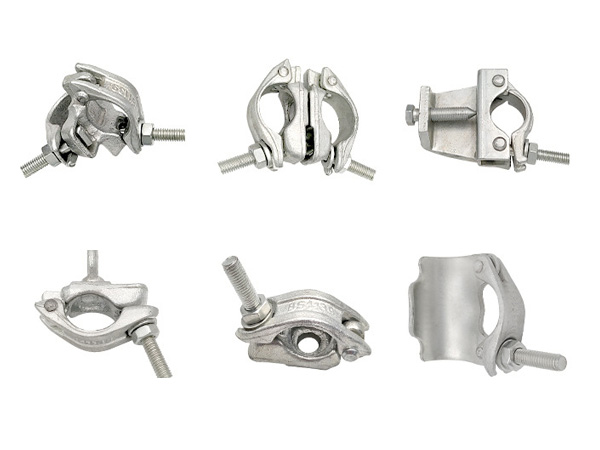
What Are Scaffold Fittings?
Scaffold fittings are mechanical connecting devices designed to join scaffolding tubes and other structural elements together. They form the foundation of tube-and-coupler scaffolding systems, which are widely adopted in the construction industry due to their exceptional flexibility and structural strength. These fittings enable scaffolding to be assembled into various shapes and configurations, making them suitable for both simple residential projects and complex large-scale construction works.
Why Are Scaffold Fittings Important?
Scaffold fittings are more than just auxiliary accessories—they are critical safety components that directly affect the overall stability of scaffolding systems. Their main functions include:
Guaranteeing the structural stability of the entire scaffolding system
Distributing loads evenly across the scaffold to avoid concentrated stress
Establishing secure and reliable connections between scaffolding tubes
Enabling flexibility in the design and layout of scaffolding to adapt to different project needs
Preventing movement, displacement, or collapse during construction operations
Even with high-quality scaffolding tubes, the lack of properly selected and installed fittings cannot ensure the safety of the scaffolding system.
Essential Types of Scaffold Fittings
A clear understanding of the main types of scaffold fittings is crucial to ensuring that the right components are used for each specific application scenario.
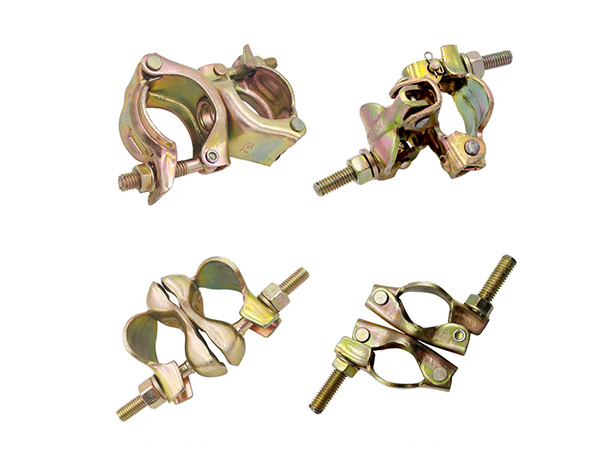
1. Couplers (Clamps)
Couplers are the most widely used scaffold fittings and serve as the core components for connecting scaffolding tubes.
Right-angle coupler (double coupler): Used to connect two scaffolding tubes at a 90-degree angle
Swivel coupler: Allows for tube connections at any angle, offering greater flexibility
Sleeve coupler: Joins two tubes end-to-end in a horizontal direction to extend their length
Putlog coupler: Connects transoms to ledgers, ensuring the stability of the horizontal support structure
These couplers form the core framework of any scaffolding structure, determining its overall stability and load-bearing capacity.
2. Base Plates and Sole Plates
Base plates are installed at the bottom of vertical standards (uprights) of the scaffolding system.
Distribute the total load of the scaffolding evenly to the ground
Prevent the scaffolding from sinking or shifting due to uneven load distribution
Enhance the overall stability of the scaffolding system
Sole plates (usually made of wooden boards) are often placed beneath base plates when working on soft ground, further dispersing the load and preventing ground subsidence.
3. Adjustable Base Jacks
Adjustable base jacks are specially designed for construction sites with uneven ground surfaces.
Allow for precise height adjustment of the scaffolding
Ensure that the entire scaffolding system remains level, regardless of ground irregularities
Improve safety and stability when working on irregular terrain
They are particularly useful for outdoor construction projects and infrastructure works, where ground conditions are often uneven.
4. Joint Pins and Spigots
These components are specifically used for connecting vertical scaffolding tubes, playing a key role in multi-level scaffolding construction.
Ensure accurate alignment between upper and lower vertical tubes
Enhance the vertical stability of the scaffolding system
Enable the construction of multi-level scaffolding, which is essential for high-rise projects
They are indispensable components for tall scaffolding systems, directly affecting the vertical load-bearing capacity and overall safety.
5. Board Retaining Clips
Board retaining clips are used to secure scaffold planks (scaffold boards) in place, ensuring the safety of the working platform.
Prevent accidental movement or slipping of scaffold planks during construction
Improve the safety of workers operating on the scaffolding platform
Ensure the stability of the walking platform, providing a secure working surface
Materials Used in Scaffold Fittings
The durability and performance of scaffold fittings are largely determined by the materials used in their manufacturing. Common materials for scaffold fittings include:
Forged steel: High in strength and toughness, making it suitable for heavy-duty construction applications
Pressed steel: Lightweight and cost-effective, ideal for general construction scenarios
Hot-dip galvanized steel: Boasts excellent corrosion resistance, making it perfect for outdoor use
Galvanized scaffold fittings are widely favored in the construction industry due to their longer service life and strong resistance to harsh environmental conditions such as rain, humidity, and corrosion.
Applications in Construction
Scaffold fittings are widely used across various sectors of the construction industry, including:
Residential Projects
They provide support for tasks such as exterior painting, roofing, and exterior wall repairs in residential buildings.
Commercial Construction
They enable safe access to elevated areas during the construction of high-rise buildings, office complexes, and shopping centers.
Industrial Facilities
In factories, power plants, and refineries, scaffold fittings are used to build temporary access structures for maintenance, installation, and repair work.
Infrastructure Projects
They are essential components for the construction of bridges, tunnels, highways, and other infrastructure projects, providing safe access for construction workers.
Key Safety Considerations
The correct use of scaffold fittings is critical to preventing construction accidents and ensuring on-site safety. Key safety practices include:
Regularly inspect scaffold fittings for damage, rust, or corrosion
Ensure all couplers and connections are tightened properly to avoid loosening
Use only certified and load-tested scaffold fittings that meet safety standards
Strictly follow local safety regulations and industry standards during installation and use
Avoid mixing incompatible scaffolding systems and fittings
Routine inspection and proper installation of scaffold fittings can significantly reduce safety risks and ensure a secure working environment.
Tips for Choosing the Right Scaffold Fittings
To ensure optimal performance and safety of the scaffolding system, consider the following tips when selecting scaffold fittings:
Select fittings based on the specific load requirements of the project
Choose corrosion-resistant materials (such as galvanized steel) for outdoor construction projects
Ensure that the selected fittings are compatible with the scaffolding system being used
Purchase fittings from reliable and certified manufacturers to guarantee quality
Consider the ease of installation and maintenance to improve construction efficiency
Conclusion
Scaffold fittings are essential components that determine the safety, strength, and flexibility of scaffolding systems. From couplers and base plates to joint pins and board retaining clips, each type of fitting plays a unique and critical role in maintaining the structural integrity of the scaffolding. By understanding the types, functions, and materials of scaffold fittings, and selecting high-quality, compliant components, construction professionals can create safe and efficient working environments, ultimately improving the overall efficiency and safety of construction projects.
References
GB/T 7714:Properties of tube and fitting scaffold connections under cyclical loads. Journal of Constructional Steel Research
MLA:Safety Analysis and Localization of Scaffold Joints Using UAV-Acquired Images. Journal of Construction Engineering and Management
APA:Corrosion Resistance of Hot-Dip Galvanized Scaffold Fittings in Outdoor Construction Environments. Construction and Building Materials

Contact Us
Tel:+86-15831733891
E-mail:yichengbuildingmaterials@gmail.com
Add:100 meters south of Weicun Village, Hechengjie Town, Xian County, Cangzhou City, Hebei Province
Url:https://www.yc-buildingmaterials.com