







- Site Navigation -
NEWS LIST
Steel Support Load-Bearing Basics: What Engineers Must Know
Author:yicheng Date:2026-02-05 10:02:16 Hits:132
Why Steel Support Matters in Load-Bearing Design
In modern construction and industrial engineering, Steel Support systems play a fundamental role in ensuring structural safety, stability, and long-term performance. Whether applied in buildings, bridges, industrial plants, or infrastructure frameworks, steel supports are responsible for transferring loads efficiently from superstructures to foundations.
With professional manufacturer-controlled production and factory-based processing, Steel Support components today are produced with high dimensional accuracy and consistent quality, allowing reliable batch supply for large-scale projects. Engineers must understand how steel supports carry loads, resist deformation, and integrate with surrounding structures to achieve safe and cost-effective designs.
From columns and beams to bracing systems and frames, Steel Support technology forms the backbone of modern load-bearing structures.
What Is Steel Support in Engineering Structures?
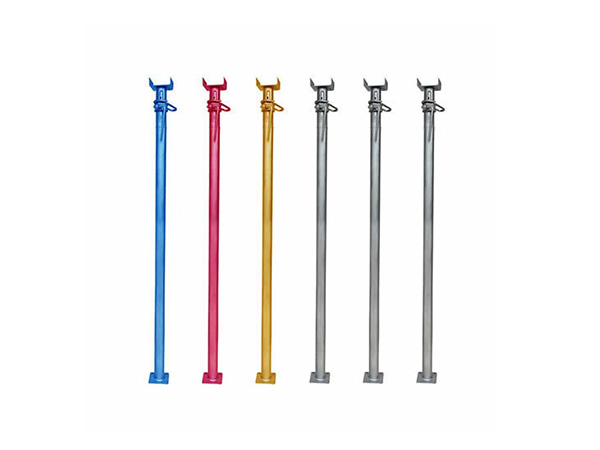
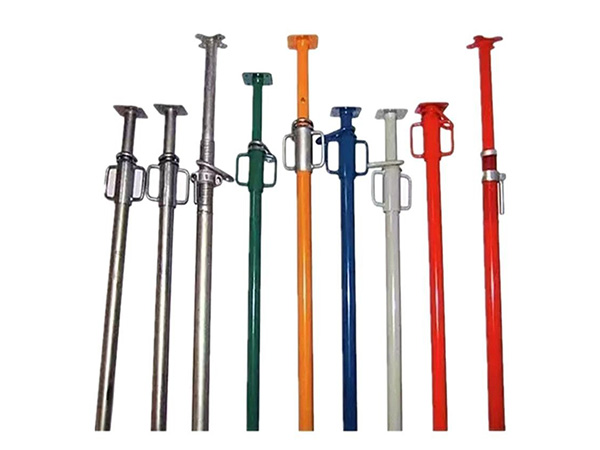
Steel Support refers to structural steel elements designed to bear and transmit loads within a building or mechanical system. These supports include columns, beams, trusses, brackets, frames, and reinforcement members that stabilize structures against vertical and horizontal forces.
In factory production, Steel Support parts are prefabricated using CNC cutting, automated welding, and strict inspection processes. This ensures consistent geometry, controlled tolerances, and predictable mechanical behavior when installed on site.
Unlike traditional materials, steel offers a high strength-to-weight ratio, enabling engineers to design lighter yet stronger load-bearing systems.
Basic Load Types Acting on Steel Support
Understanding the forces acting on Steel Support is essential for proper engineering design. The main load types include:
·Dead load: The permanent weight of the structure itself.
·Live load: Variable loads from people, equipment, and operations.
·Wind load: Horizontal pressure caused by airflow.
·Seismic load: Dynamic forces generated during earthquakes.
·Thermal load: Expansion and contraction due to temperature changes.
Steel Support systems must safely transfer these loads to the foundation while limiting deformation and maintaining structural integrity. Manufacturer production quality ensures each support element can handle its designed load capacity.
Load-Bearing Mechanism of Steel Support
The load-bearing mechanism of Steel Support depends on how forces travel through structural members.
Columns mainly resist compression, beams resist bending and shear, and bracing systems resist lateral forces. Steel frames distribute loads efficiently through connected joints, preventing stress concentration in a single area.
Factory-produced components allow precise alignment and connection accuracy, which improves force distribution and reduces the risk of buckling or fatigue. This is one reason professional Steel Support manufacturers emphasize controlled production and batch consistency.
Material Performance and Strength Characteristics
Steel is widely used in load-bearing systems because of its mechanical properties:
·High tensile and compressive strength
·Good ductility and toughness
·Stable performance under dynamic loads
·Predictable elastic behavior
Steel Support materials are often treated with heat processing and surface protection to improve durability and corrosion resistance. During factory production, material sourcing and testing ensure uniform quality across batch supply, which is crucial for long-term structural safety.
Design Considerations for Steel Support Systems
Engineers must evaluate several factors when designing Steel Support structures:
1. Load Capacity
Supports must safely handle maximum expected loads with appropriate safety factors.
2. Stability and Buckling Control
Slender supports are prone to buckling, so cross-section design and bracing are critical.
3. Connection Performance
Bolted or welded joints transfer forces between members and influence overall stiffness.
4. Environmental Conditions
Corrosion, temperature variation, and humidity affect long-term performance.
5. Installation Tolerance
Factory precision improves on-site assembly and reduces misalignment risks.
By integrating these factors with manufacturer production capabilities, engineers achieve both safety and cost efficiency.
Factory Production Advantages in Steel Support Manufacturing
Working with a professional Steel Support Manufacturer provides major advantages in quality and scalability.
Factory production typically includes:
·CNC cutting and drilling
·Robotic welding
·Surface treatment and coating
·Dimensional inspection
·Load and stress testing
These standardized processes ensure that every Steel Support element meets engineering requirements before shipment. Batch production capacity also allows factories to supply large volumes consistently, supporting industrial parks, commercial buildings, and infrastructure projects.
Installation and Performance Optimization
Even the best-designed Steel Support must be installed correctly.
Proper installation includes alignment control, correct torque on bolts, clean contact surfaces, and inspection of welded joints. Factory documentation often provides guidance to ensure load paths remain as designed.
Well-installed Steel Support systems reduce vibration, minimize deformation, and improve the service life of structures under continuous operation or environmental stress.
Applications of Steel Support in Engineering Projects
Steel Support systems are widely used in:
·High-rise buildings
·Industrial plants and workshops
·Warehouses and logistics centers
·Bridges and transport structures
·Power and energy facilities
·Modular construction frameworks
Thanks to factory production and manufacturer batch supply, Steel Support components can be customized for different spans, heights, and load requirements across various industries.
Sustainability and Long-Term Value
Sustainable engineering is becoming increasingly important. Steel Support systems contribute to sustainability by using recyclable materials and reducing overall structural weight.
Factory production minimizes material waste and improves resource utilization. Durable Steel Support design also reduces maintenance and replacement frequency, lowering long-term environmental impact.
By combining engineering efficiency with production optimization, Steel Support solutions deliver both economic and ecological benefits.
Future Trends in Steel Support Engineering
As construction technology evolves, Steel Support manufacturing is becoming more intelligent and precise.
Factories are integrating digital design tools, automated fabrication lines, and real-time inspection systems. These innovations enhance accuracy, reduce errors, and improve batch consistency.
With urbanization and infrastructure development continuing worldwide, demand for advanced Steel Support load-bearing systems will keep growing.
Conclusion: Choosing Reliable Steel Support for Load-Bearing Safety
Understanding the fundamentals of Steel Support load-bearing design is essential for engineers working on modern construction and industrial projects.
By cooperating with a professional Steel Support Manufacturer supported by factory production and bulk supply capability, project owners benefit from stable quality, predictable performance, and efficient delivery.
Whether for buildings, infrastructure, or industrial frameworks, Steel Support remains one of the most reliable and future-oriented solutions for safe and efficient load-bearing systems.
References
GB/T 7714:Li S, Wang J, Yu Z, et al. Study on the bearing capacity of steel formwork concrete columns[J]. Buildings, 2023, 13(3): 820.
MLA:Li, Shengqiang, et al. "Study on the bearing capacity of steel formwork concrete columns." Buildings 13.3 (2023): 820.
APA:Li, S., Wang, J., Yu, Z., Li, Y., & Guo, H. (2023). Study on the bearing capacity of steel formwork concrete columns. Buildings, 13(3), 820.

Contact Us
Tel:+86-15831733891
E-mail:yichengbuildingmaterials@gmail.com
Add:100 meters south of Weicun Village, Hechengjie Town, Xian County, Cangzhou City, Hebei Province
Url:https://www.yc-buildingmaterials.com