







- Site Navigation -
NEWS LIST
Steel Support Systems for Concrete Formwork Construction
Author:yicheng Date:2026-06-15 17:25:22 Hits:166

Concrete construction relies on robust support systems to hold formwork in position during pouring and curing. Steel support systems have become the industry standard, offering superior load capacity, reusability, and adjustability compared to timber or other temporary support methods. Understanding these systems helps contractors plan efficient, safe formwork operations.
Understanding Steel Support Functions
Steel supports (also called steel props, shoring posts, or adjustable shores) carry vertical loads from fresh concrete, formwork, and construction activities to suitable bearing surfaces below. They must maintain formwork position within specified tolerances while resisting both axial compression and potential lateral forces during concrete placement operations.
Professional steel support manufacturers design their products with adequate load capacity, stable base configurations, and reliable adjustment mechanisms. These design features ensure supports perform safely throughout the critical period between concrete placement and strength development.
Adjustable Steel Prop Design
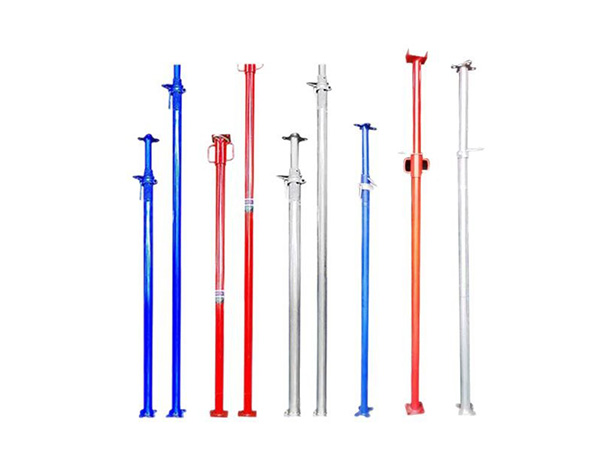
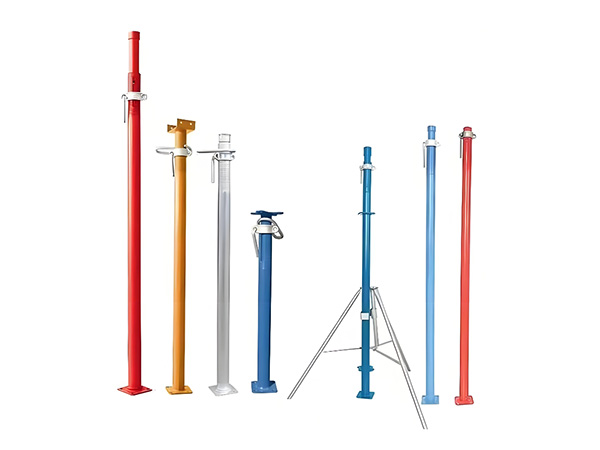
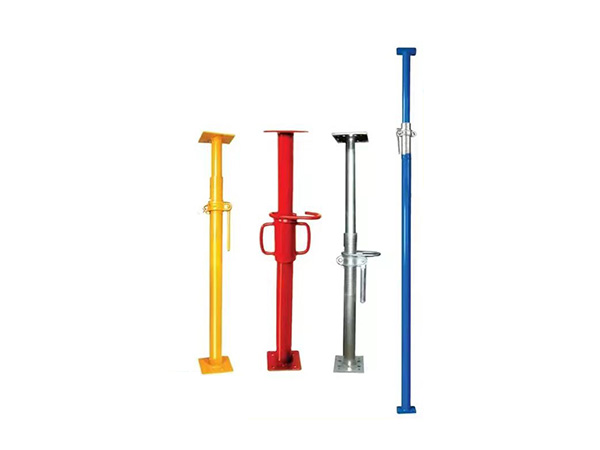
Adjustable steel props feature telescoping inner and outer tubes with threaded adjustment mechanisms. This adjustability accommodates varying floor-to-floor heights and allows fine leveling of formwork surfaces. Typical props adjust through ranges of 500mm or more while maintaining rated load capacity throughout the adjustment range.
Leading adjustable prop suppliers provide load capacity charts showing permissible loads at different extension lengths. As extension increases, permissible load decreases due to slenderness effects—understanding these relationships prevents dangerous overloading of extended props.
Load Capacity and Safety Factors
Steel support load capacities depend on tube dimensions, material strength, extension length, and base stability. Professional manufacturers test their products to determine safe working loads with appropriate safety factors, typically 2.0 or greater for axial compression loading. These safety factors account for eccentric loading, impact forces, and material variability.
Experienced shoring system manufacturers provide comprehensive load tables and technical guidance for proper prop selection. They also offer design assistance for complex shoring configurations where standard load tables may not directly apply.
Base Plate and Head Plate Options
Steel support performance depends significantly on base and head plate configurations. Flat plates distribute loads over larger areas, preventing point loading on slabs or soil. Fork heads accommodate timber beams or steel channels used in formwork systems. U-heads support horizontal members with positive lateral restraint.
Quality-focused steel prop suppliers offer various head and base plate options to match different formwork systems and bearing conditions. They provide dimensional specifications and load capacity ratings for each configuration, supporting proper component selection.
Galvanizing and Durability
Construction site environments subject steel supports to concrete splatter, water exposure, and rough handling. Hot-dip galvanizing provides the most durable corrosion protection, extending support service life through many reuse cycles. Galvanized supports maintain appearance and function far longer than painted alternatives in demanding site conditions.
Reputable galvanized steel support manufacturers apply zinc coatings meeting ISO 1461 standards with minimum coating thickness of 55 microns. This galvanizing quality ensures years of corrosion-free service even in aggressive construction environments with frequent wetting and concrete chemical exposure.
Installation Best Practices
Proper steel support installation follows specific procedures to ensure safety and performance. Supports must be plumb, with bases on firm, level surfaces. Bracing prevents lateral movement under load. Adjustments lock securely before concrete placement begins. Inspection during and after concrete pouring verifies support stability.
Established formwork support suppliers provide installation guidelines, training materials, and on-site support for proper shoring system assembly. Their technical expertise helps contractors avoid common installation errors that can lead to formwork failures and safety incidents.
Making Informed Steel Support Decisions
Selecting steel support systems requires evaluating load requirements, height range, reusability needs, and site conditions. Engage experienced suppliers early in the formwork planning process, provide comprehensive loading information, and request technical recommendations that address your specific project requirements.
Steel support systems deliver reliable, cost-effective formwork shoring for concrete construction projects of every scale. By understanding system capabilities and partnering with knowledgeable suppliers, contractors can implement shoring solutions that ensure safe working conditions and quality concrete results.
References
American Concrete Institute (ACI) - ACI 347: Guide to Formwork for Concrete
Occupational Safety and Health Administration (OSHA) - Concrete and Masonry Construction Standard 1926.700
International Organization for Standardization (ISO) - ISO 1461 Hot Dip Galvanized Coatings

Contact Us
Tel:+86-15831733891
E-mail:yichengbuildingmaterials@gmail.com
Add:100 meters south of Weicun Village, Hechengjie Town, Xian County, Cangzhou City, Hebei Province
Url:https://www.yc-buildingmaterials.com