







- Site Navigation -
NEWS LIST
Through-Wall Bolt for Formwork Systems Explained
Author:yicheng Date:2026-01-30 09:48:23 Hits:148
In concrete construction, accuracy, stability, and safety depend heavily on how formwork panels are connected and supported. One of the most important fastening components in modern formwork engineering is the Through-Wall Bolt. It plays a critical role in holding formwork panels together, resisting concrete pressure, and maintaining precise wall dimensions during pouring and curing.
With increasing demand for efficient building systems, the Through-Wall Bolt has become a standard solution in infrastructure, residential, and industrial projects. Supported by professional Manufacturer capability and Factory-level Production supply, large-scale output ensures consistent quality, load performance, and compatibility with different formwork systems.
This article provides a detailed explanation of what a Through-Wall Bolt is, how it works in formwork systems, its structural design, production process, and why it is essential for modern construction efficiency.
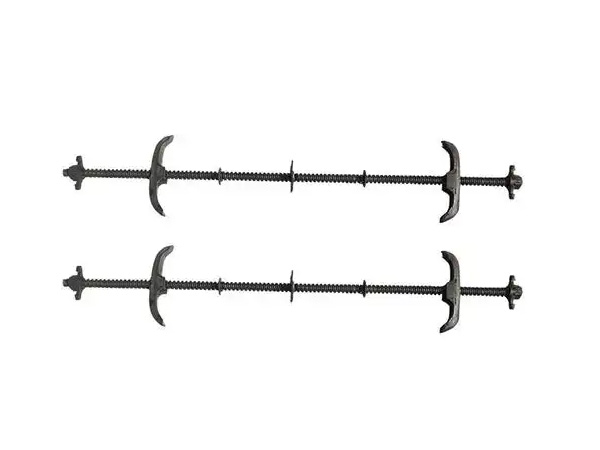
What Is a Through-Wall Bolt?
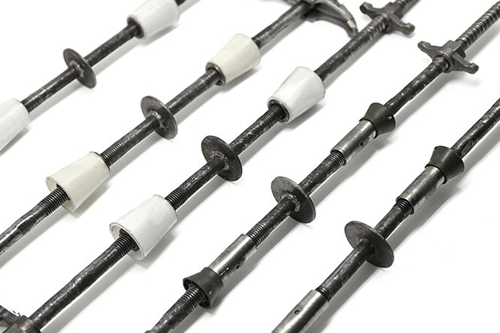
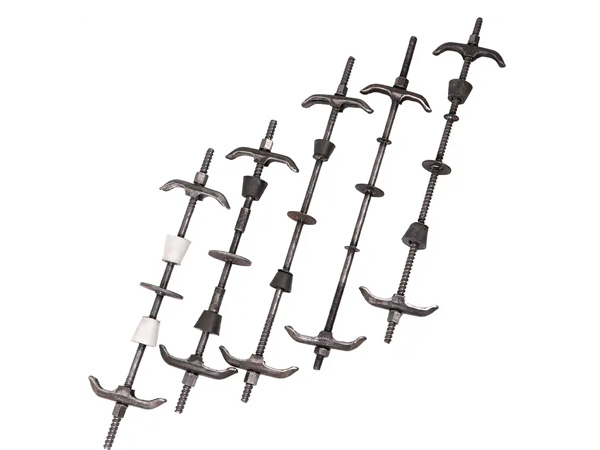
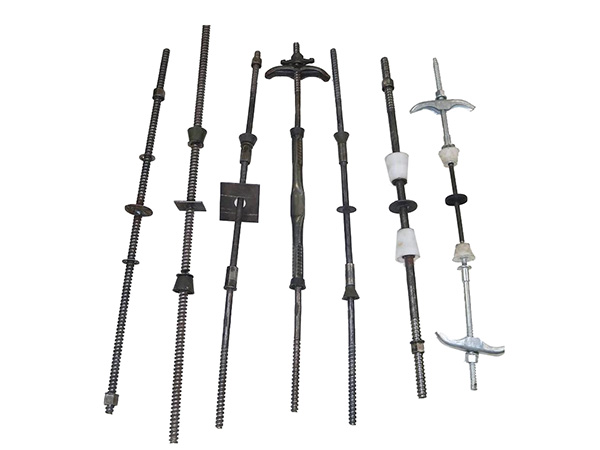
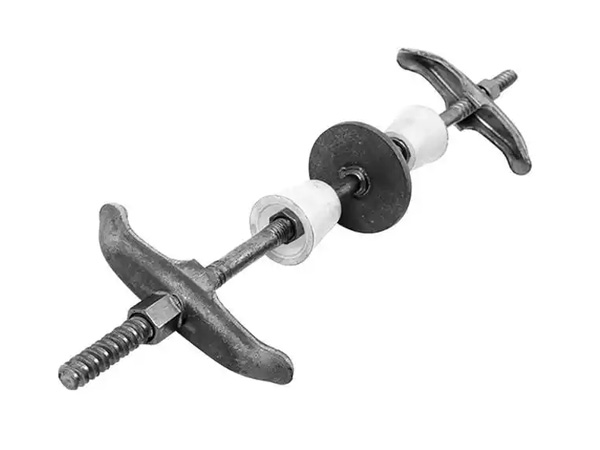
A Through-Wall Bolt is a steel fastening rod used in concrete formwork to connect opposite panels across a wall section. It passes through the formwork, spacers, and sleeves, locking both sides together before concrete is poured.
Its main purpose is to resist the lateral pressure of fresh concrete and keep the wall thickness uniform. Without a reliable Through-Wall Bolt system, formwork panels may shift, bulge, or fail under load.
Key functions include:
Maintaining wall alignment
Resisting concrete hydrostatic pressure
Ensuring accurate wall thickness
Supporting safe pouring operations
Allowing controlled dismantling after curing
Because of these roles, the Through-Wall Bolt is widely used in shear walls, basement structures, tunnels, foundations, and industrial concrete frames.
Structural Design of a Through-Wall Bolt
The performance of a Through-Wall Bolt depends on its structural design and material precision. It is not just a simple rod but a coordinated system of components.
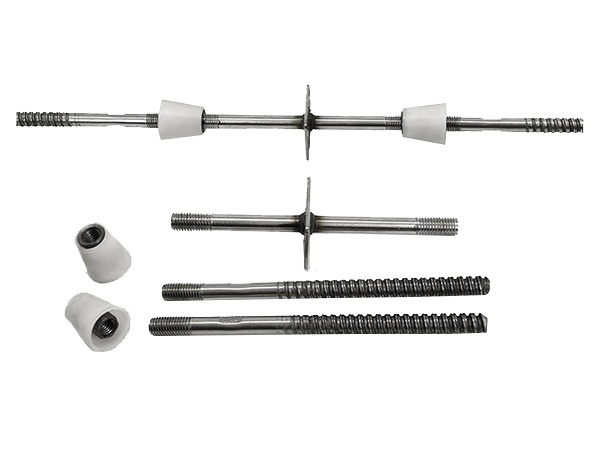
Main Components
Bolt Rod – transfers tension forces across the wall
Cones or Nuts – lock the formwork panels in position
Sleeves or Pipes – control wall thickness and protect the rod
Washers / Plates – distribute load on panel surfaces
These parts work together to form a stable tension system. The bolt resists outward forces generated by fresh concrete and keeps both panels securely connected.
From a factory production perspective, precision machining and threading ensure proper fit, smooth tightening, and reliable load transfer across the formwork structure.
How Through-Wall Bolt Works in Formwork Systems
The working principle of a Through-Wall Bolt is based on tension resistance and load balancing.
Before pouring, the bolt passes through pre-aligned holes in both formwork panels and spacers. Nuts are tightened on each end, clamping the system together. When concrete is poured, lateral pressure tries to push panels outward. The Through-Wall Bolt resists this movement by carrying tensile forces across the wall section.
This prevents:
Panel separation
Wall thickness variation
Surface deformation
Structural instability during curing
Once the concrete reaches sufficient strength, the bolt can be loosened and removed, while sleeves remain embedded to maintain surface integrity.
With Manufacturer-level Production control, consistent bolt strength and threading accuracy ensure predictable performance under different pouring conditions.
Advantages of Using Through-Wall Bolt Systems
Choosing a Through-Wall Bolt for formwork provides both structural and operational benefits.
1. High Load Resistance
Through-Wall Bolts are designed to withstand heavy lateral concrete pressure without deformation, ensuring stable formwork performance.
2. Accurate Wall Geometry
By controlling spacing, bolts ensure uniform wall thickness and surface quality.
3. Faster Installation
Standardized bolt systems simplify assembly and dismantling, reducing labor time.
4. Reusability
Properly treated bolts can be reused across multiple projects, lowering overall material cost.
5. Factory-Controlled Quality
A professional Through-Wall Bolt Factory with Production capability ensures dimensional accuracy, surface consistency, and load stability for bulk supply.
These advantages make Through-Wall Bolt systems ideal for both small-scale and large-volume construction projects.
Manufacturing and Production Process
The performance of a Through-Wall Bolt starts in the production phase. Factory-based manufacturing ensures each unit meets engineering and safety expectations.
Typical production steps include:
Material selection – high-strength steel for tension performance
Cutting and forming – precise length control
Thread rolling – smooth, durable threads
Heat treatment – improves mechanical strength
Surface coating – corrosion resistance for site environments
Inspection and testing – verifies dimensional and load performance
With integrated Manufacturer Production systems, batch consistency and quality stability support reliable installation on large construction sites.
This factory-driven approach reduces project risk and enhances structural safety throughout the pouring process.
Applications in Concrete Construction
A Through-Wall Bolt is widely used wherever formwork must resist pressure and maintain geometry.
Common application scenarios include:
Basement and foundation walls
Shear wall construction
Tunnel and subway structures
Retaining walls
Industrial concrete frames
In each application, the Through-Wall Bolt ensures formwork stability, preventing displacement and surface defects during concrete placement. With factory-level supply support, contractors benefit from steady material flow and predictable installation behavior.
Quality Control and Safety Considerations
Safety is directly related to bolt reliability. A professional Through-Wall Bolt Manufacturer emphasizes inspection and testing at every stage.
Important control factors include:
Thread accuracy
Tensile strength testing
Surface coating integrity
Dimensional tolerance
Load simulation checks
Factory inspections ensure each Through-Wall Bolt performs under real construction stresses, improving safety margins and minimizing site risks.
Consistent Production management ensures that every batch delivers the same performance standard for demanding environments.
Choosing the Right Through-Wall Bolt Supplier
When selecting a Through-Wall Bolt system, production strength matters as much as price.
Key evaluation points include:
Manufacturer-level factory operation
Stable production capacity
Quality inspection procedures
Batch consistency
Long-term supply capability
A supplier with strong Production and Factory manufacturing systems ensures smoother project execution and reliable performance from start to finish.
Conclusion: Why Through-Wall Bolt Is Essential for Formwork Systems
The Through-Wall Bolt is a core fastening element in modern concrete formwork systems. Its ability to resist pressure, maintain geometry, and support efficient installation makes it indispensable in construction engineering.
Backed by professional Manufacturer capability and Factory-level Production supply, Through-Wall Bolt systems deliver consistent quality, predictable performance, and scalable supply for projects of any size.
For contractors and builders seeking safe, accurate, and efficient formwork solutions, focusing on high-quality Through-Wall Bolt production ensures structural reliability throughout every phase of concrete construction.
References
GB/T 7714:Sarkisian M. Designing tall buildings: structure as architecture[M]. Routledge, 2016.
MLA:Sarkisian, Mark. Designing tall buildings: structure as architecture. Routledge, 2016.
APA:Sarkisian, M. (2016). Designing tall buildings: structure as architecture. Routledge.

Contact Us
Tel:+86-15831733891
E-mail:yichengbuildingmaterials@gmail.com
Add:100 meters south of Weicun Village, Hechengjie Town, Xian County, Cangzhou City, Hebei Province
Url:https://www.yc-buildingmaterials.com