







- Site Navigation -
NEWS LIST
Understanding the Role of Formwork Steel Props in Slab Support Systems
Author:yicheng Date:2026-04-14 16:41:51 Hits:117
In modern construction engineering, slab casting is one of the most critical structural stages that directly affects building safety and long-term performance. To ensure stability during concrete pouring and curing, contractors rely heavily on formwork steel props. These adjustable support systems play a vital role in maintaining load balance, structural alignment, and construction safety across residential, commercial, and infrastructure projects.
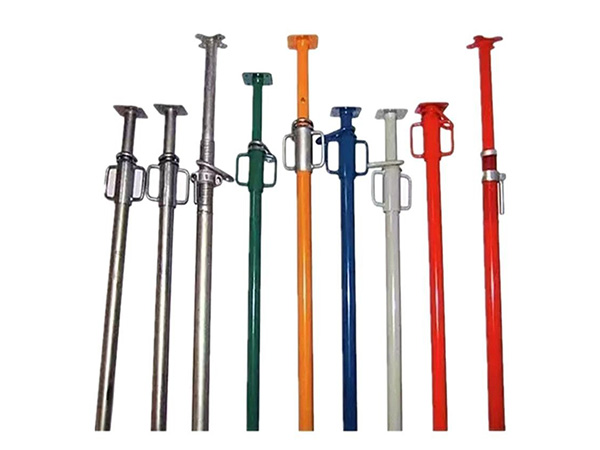
This article explains how formwork steel props in slab support systems work, their engineering advantages, and why they remain an essential component in temporary structural support.
What Are Formwork Steel Props in Slab Construction?
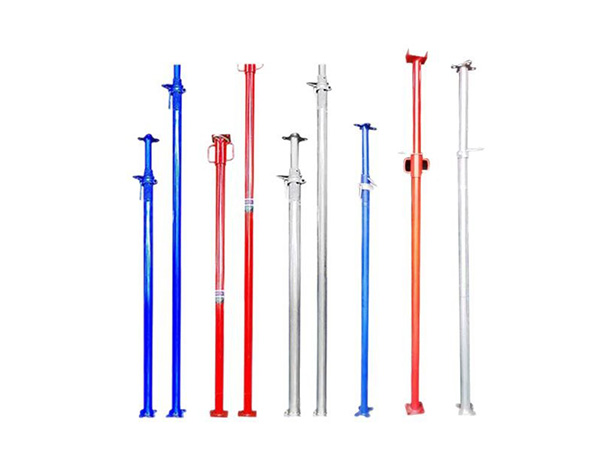
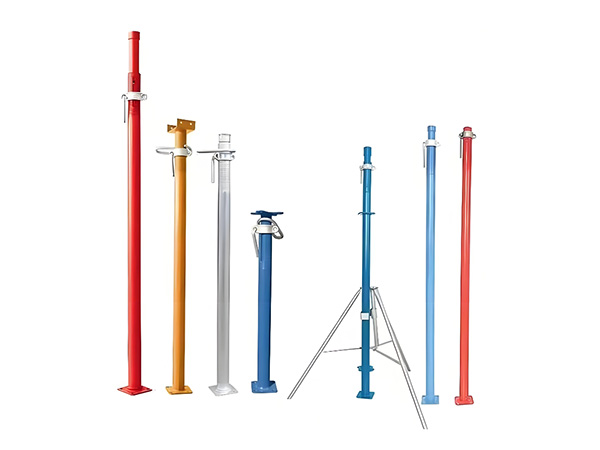
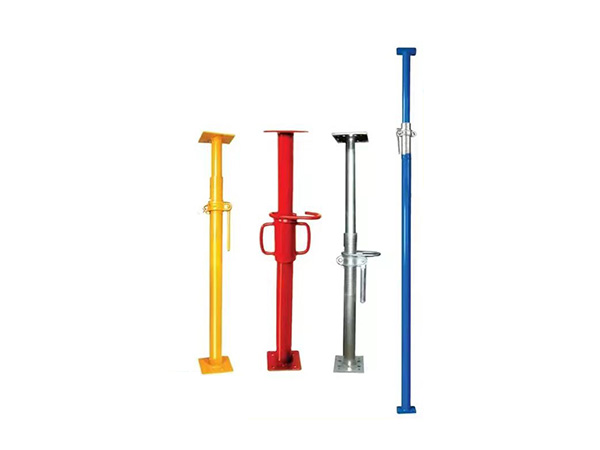
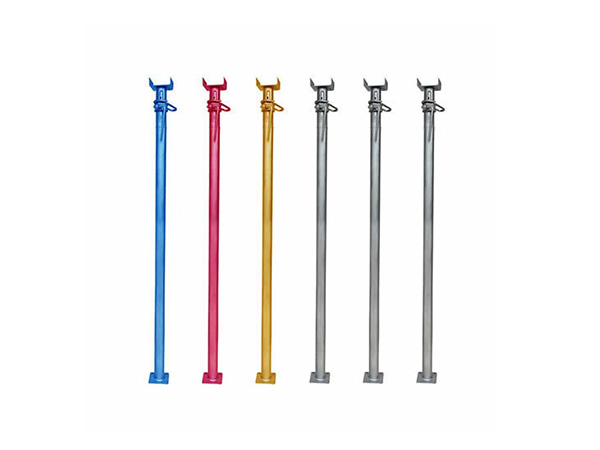
Formwork steel props are vertical adjustable support elements used to carry the weight of wet concrete slabs and formwork systems until the concrete gains sufficient strength. They are typically made from high-strength steel and designed with telescopic tubes that allow height adjustment according to site requirements.
A standard prop consists of an inner tube, outer tube, threaded adjustment section, base plate, and top plate. This modular structure enables precise positioning, making it suitable for different slab heights and construction conditions. In slab support systems, these props act as temporary load-bearing columns.
How Slab Support Systems Rely on Steel Props
In slab construction, freshly poured concrete exerts significant pressure on the formwork system. Without proper support, this load can lead to deformation or even collapse. Formwork steel props in slab support systems are designed to transfer these loads safely to the ground.
The load path typically works as follows:
·Concrete load is applied to slab formwork
·Load is transferred to beams or primary formwork members
·Steel props carry vertical forces downward
·Base plates distribute load evenly to the ground or lower structure
This load transfer mechanism ensures structural stability during curing and prevents premature failure of the formwork system.
Engineering Advantages of Formwork Steel Props
From a structural engineering perspective, steel props offer several advantages that make them indispensable in slab support applications:
1. High Load-Bearing Capacity
Steel props are engineered to withstand significant axial loads, making them suitable for thick slabs and multi-story construction projects.
2. Adjustable Height Flexibility
Their telescopic design allows quick adjustment to match varying slab heights, reducing setup time and increasing construction efficiency.
3. Structural Stability and Precision
Properly installed props ensure uniform load distribution, reducing the risk of uneven settlement or slab deformation.
4. Reusability and Cost Efficiency
High-quality steel props can be reused multiple times across different projects, significantly lowering long-term construction costs.
5. Corrosion Resistance Options
When manufactured as galvanized units, they offer enhanced durability and resistance to harsh environmental conditions.
These benefits make them a preferred choice in slab formwork support systems used in professional construction environments.
Common Applications in Construction Projects
Formwork steel props in slab support systems are widely used in various construction scenarios, including:
·Residential floor slab construction
·Commercial building multi-level slabs
·Bridge deck formwork systems
·Underground parking structures
·Industrial platform slabs
In each case, they provide temporary vertical support until the concrete achieves full structural strength. Their versatility allows contractors to adapt to different project scales and structural designs.
Material Quality and Structural Reliability
The performance of steel props depends heavily on material strength, manufacturing precision, and surface treatment. High-grade structural steel ensures better compressive strength and resistance to deformation under load.
In demanding construction environments, galvanized surface treatment further enhances durability by protecting against corrosion. This is especially important in outdoor slab construction where moisture exposure is high. Therefore, many engineers specify heavy-duty formwork steel props for critical structural applications.
Installation Best Practices for Slab Safety
Correct installation is essential for ensuring the performance of slab support systems. Steel props must be placed vertically on a stable foundation, and base plates should be used to distribute loads evenly.
Key best practices include:
·Ensuring vertical alignment before load application
·Locking adjustment mechanisms securely
·Avoiding overloading beyond rated capacity
·Inspecting props regularly during concrete curing
·Replacing damaged components immediately
Following these practices significantly reduces the risk of structural failure and improves overall site safety.
Steel Props vs Alternative Support Systems
In construction engineering, alternatives such as timber supports or modular scaffolding systems are sometimes used. However, steel props offer superior performance in terms of load capacity, durability, and adjustability.
Unlike timber, steel props do not deform under heavy load. Compared to complex scaffolding systems, they are easier to install and adjust. This makes them particularly suitable for temporary slab support equipment where efficiency and safety are critical.
Conclusion: Why Steel Props Are Essential in Slab Support Systems
Formwork steel props in slab support systems are a fundamental component of modern construction practices. Their ability to provide stable, adjustable, and reusable vertical support makes them indispensable in slab casting operations.
From small residential projects to large-scale infrastructure developments, steel props ensure structural integrity during one of the most critical phases of construction. When properly selected and installed, they enhance safety, improve efficiency, and contribute to the long-term success of any building project.
As construction standards continue to evolve, the role of high-performance steel props in slab support systems will remain a cornerstone of safe and reliable engineering practice.
References
GB/T 7714:Reliability assessment of steel scaffold shoring structures for concrete formwork.
MLA:High clearance scaffold systems during construction – structural modelling and modes of failure.
APA:Structural instability of multi-storey door-type modular steel scaffolds.

Contact Us
Tel:+86-15831733891
E-mail:yichengbuildingmaterials@gmail.com
Add:100 meters south of Weicun Village, Hechengjie Town, Xian County, Cangzhou City, Hebei Province
Url:https://www.yc-buildingmaterials.com