







- Site Navigation -
NEWS LIST
Wall Tie Bolts for Concrete Formwork Systems
Author:yicheng Date:2026-06-18 17:29:07 Hits:149
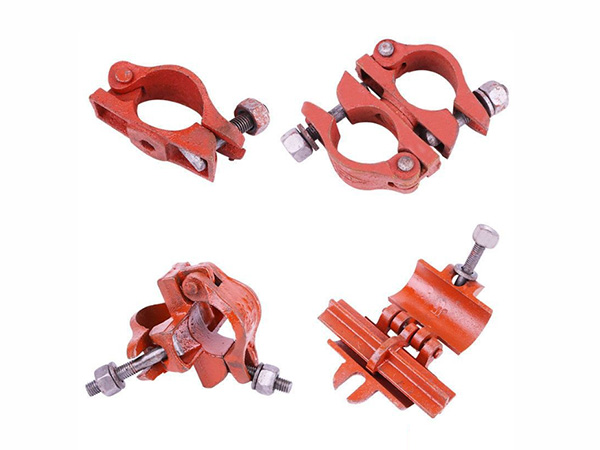
Wall tie bolts hold concrete formwork together against the substantial hydrostatic pressures generated by fresh concrete during placement. These components must develop reliable clamping forces while remaining removable or breakback-capable after concrete hardening. Understanding wall tie design and selection helps contractors specify appropriate tie systems for safe, efficient formwork operations.
Understanding Wall Tie Functions
Wall ties connect opposite formwork faces, resisting the outward pressure of fresh concrete that can exceed 75 kN/m² for tall walls placed quickly. Without adequate tie capacity, formwork can separate or burst, creating safety hazards and requiring costly remediation. Proper tie selection and installation is fundamental to formwork safety.
Professional wall tie manufacturers design their products with proven load capacity ratings, appropriate safety factors, and reliable anchorage details. These design features ensure ties perform as intended under the demanding conditions of concrete placement operations.
Through-Tie Rod Systems
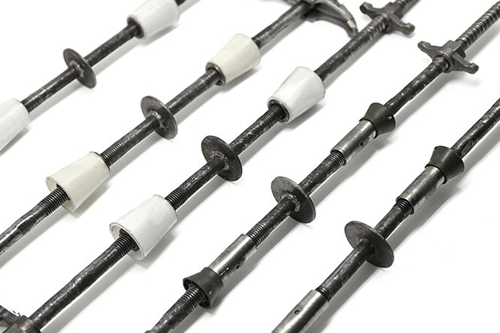
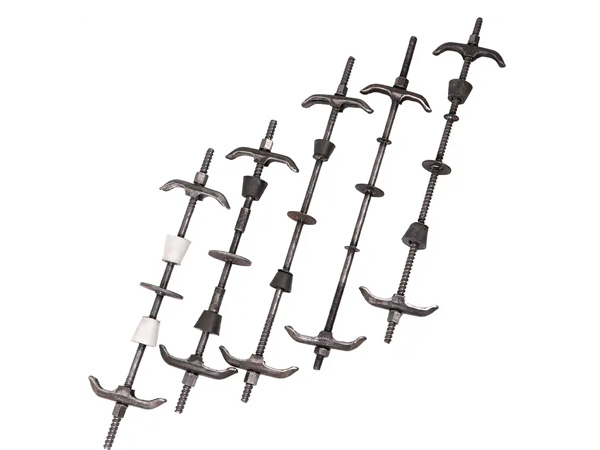
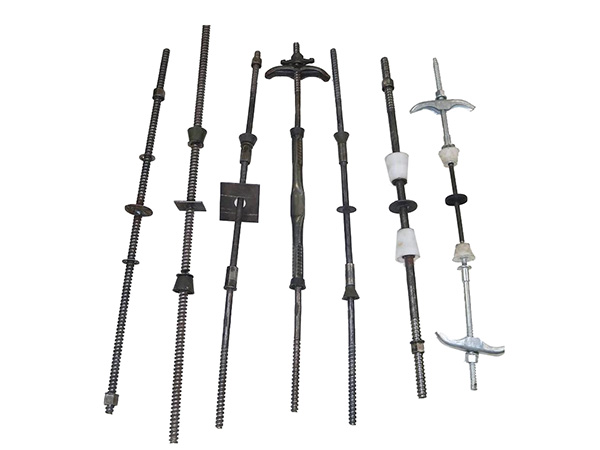
Through-tie systems use continuous rods that pass through both formwork faces and the concrete wall. After concrete hardens, the rods are removed for reuse, leaving holes that are typically grouted. This system offers excellent economy through rod reuse and is widely used for standard wall construction worldwide.
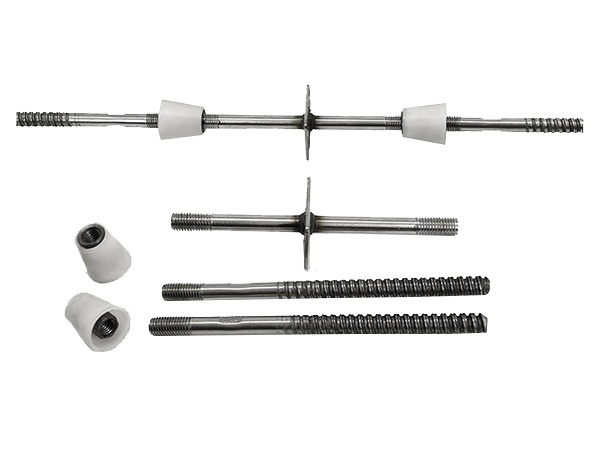
Leading tie rod suppliers produce through-ties from high-strength steel with rolled threads for maximum fatigue resistance. They provide complete systems including rods, wing nuts, water stops, and cones that ensure proper installation and reliable performance.
He-Bolt and She-Bolt Systems
He-bolt/she-bolt systems use reusable outer bolts that thread onto expendable inner ties (coil ties) embedded in the concrete. After concrete hardens, the outer bolts unscrew for reuse while the inner ties remain in the wall. This system eliminates the need for rod extraction and grouting of through-holes.
Experienced formwork tie manufacturers offer he-bolt/she-bolt systems with robust thread designs that resist cross-threading and galling during repeated assembly and disassembly cycles. Their systems incorporate positive stops and visual indicators that confirm proper engagement.
Load Capacity and Safety Factors
Wall tie load capacity depends on rod diameter, material strength, thread design, and anchorage details. Manufacturers rate their ties based on proof load testing with appropriate safety factors, typically 1.5 to 2.0 depending on the standard applied. These safety factors account for eccentric loading, impact forces, and material variability.
Quality-focused concrete tie bolt suppliers provide comprehensive load capacity data and technical guidance for proper tie spacing calculations. They also offer design assistance for walls with unusual geometry, heavy reinforcement, or rapid placement rates that increase formwork pressure.
Water Stop and Seal Features
Walls requiring waterproof construction need ties with integrated water stops that prevent water migration along the tie path through concrete. Rubber or steel water stop plates attach to ties at mid-wall thickness, creating barriers that block water penetration through the completed wall.
Reputable waterproof tie manufacturers offer ties with various water stop configurations tested to verify watertight performance. They provide installation guidelines ensuring water stops are positioned correctly relative to wall thickness and reinforcement.
Surface Finish and Breakback Options
The portion of ties remaining at the concrete surface affects final wall appearance. Breakback ties have weakened sections that allow the protruding end to be snapped off after formwork removal, leaving a recess that can be patched for a smooth finish. This feature eliminates the need for cutting tools and reduces finishing labor.
Established formwork component factories offer ties with various breakback configurations and snap-off designs. They provide depth control devices that ensure weakened sections fall at the correct position relative to the concrete surface.
Making Informed Wall Tie Decisions
Selecting wall ties requires evaluating formwork pressure, wall thickness, waterproofing requirements, surface finish specifications, and reusability economics. Engage experienced suppliers early in the formwork planning process, provide comprehensive wall geometry and placement rate information, and request technical recommendations that address your specific project requirements.
Wall tie bolts deliver critical formwork clamping performance that ensures concrete quality and construction safety. By understanding tie system options and partnering with knowledgeable suppliers, contractors can implement formwork solutions that deliver reliable performance across diverse wall construction applications.
References
American Concrete Institute (ACI) - ACI 347: Guide to Formwork for Concrete
American Concrete Institute (ACI) - ACI 117: Tolerances for Concrete Construction
Occupational Safety and Health Administration (OSHA) - Concrete and Masonry Construction Standard

Contact Us
Tel:+86-15831733891
E-mail:yichengbuildingmaterials@gmail.com
Add:100 meters south of Weicun Village, Hechengjie Town, Xian County, Cangzhou City, Hebei Province
Url:https://www.yc-buildingmaterials.com