







- Site Navigation -
NEWS LIST
What Is a Tie Rod in Construction Applications?
Author:yicheng Date:2026-01-25 20:17:08 Hits:99

Understanding Tie Rod in Construction
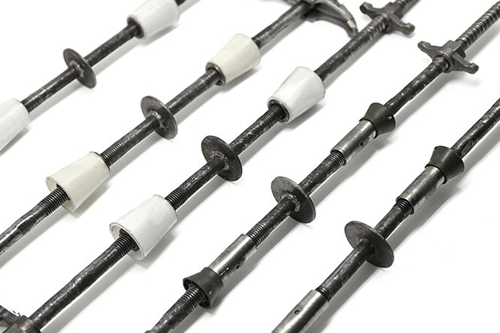
A Tie Rod is an essential fastening component widely used in construction applications, especially in concrete formwork systems. Its main purpose is to hold two opposite formwork panels together and resist the lateral pressure generated when fresh concrete is poured. Without a reliable tie rod system, concrete structures may deform, leak, or even collapse during casting.
In modern construction, tie rods are no longer simple steel bars. They are engineered products developed by professional manufacturers, supported by standardized factory production, and supplied in large volumes for infrastructure, commercial buildings, bridges, and industrial projects. Understanding what a tie rod is and how it works helps contractors, engineers, and buyers select the right solution for safe and efficient construction.
1. What Is a Tie Rod and How Does It Work?
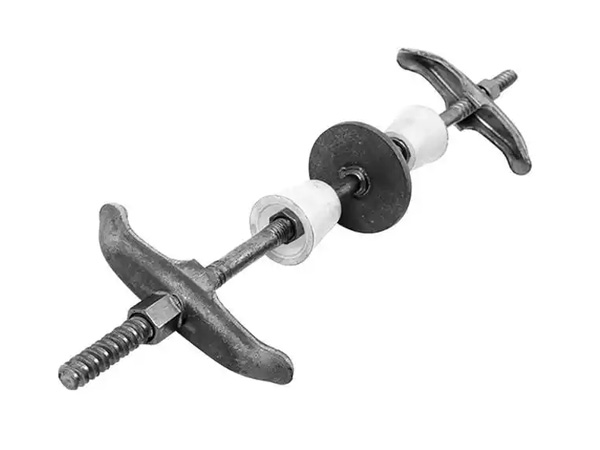
In construction applications, a tie rod is a tension member installed across formwork panels. Its core function is to counteract the outward pressure of wet concrete. When concrete is poured into the formwork, hydrostatic pressure pushes the panels apart. The tie rod connects both sides and keeps the structure aligned until the concrete gains sufficient strength.
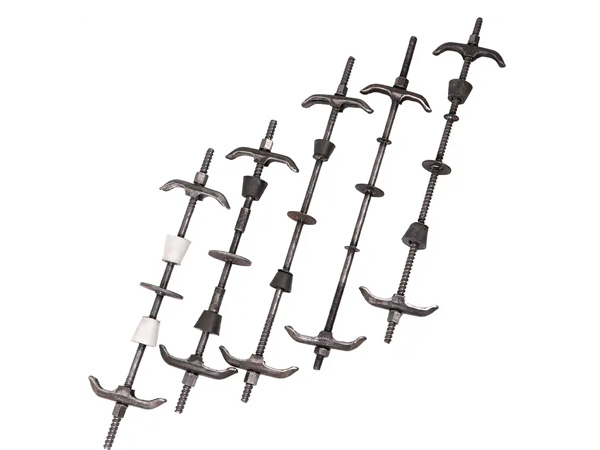
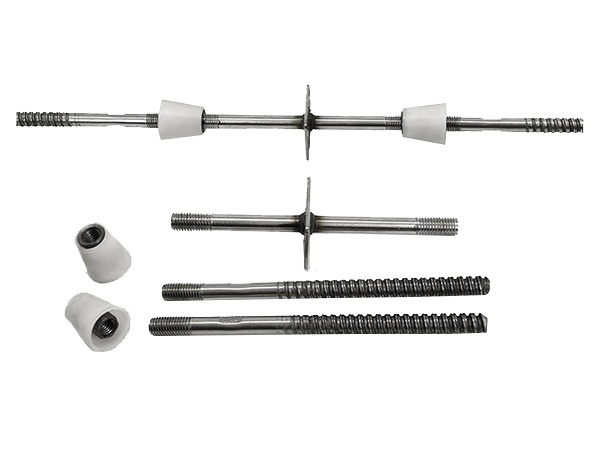
A typical tie rod system consists of:
·Tie rod bar
·Cones or sleeves
·Wing nuts or anchor plates
·Washers
Once installed, the rod transfers load evenly across the formwork. After curing, some tie rods are removed for reuse, while others remain embedded depending on the structural design.
Because of the mechanical forces involved, tie rods must be produced with accurate threading, stable material properties, and controlled tolerance during production to ensure safe performance on site.
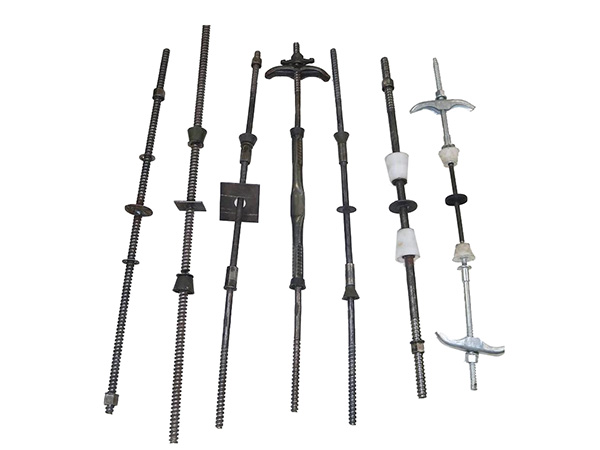
2. Main Types of Tie Rod Used in Construction
There are several types of tie rods used in different construction scenarios. Choosing the right one depends on load requirements, formwork type, and reuse expectations.
Standard Threaded Tie Rod
This is the most common type. It features continuous threading for flexible length adjustment. It works well with wing nuts and plates and is easy to install and remove.
High-Strength Tie Rod
Designed for heavy concrete pressure, this type uses stronger alloy steel and improved surface treatment for durability and safety.
Water-Stop Tie Rod
Used in waterproof concrete structures such as basements and tunnels. It prevents water penetration after formwork removal.
Through-Wall Tie Rod
Installed completely through concrete walls and often combined with sleeves for reuse.
Professional factory manufacturing ensures that these types meet consistent mechanical and dimensional standards for different construction environments.
3. Load Capacity and Safety Considerations
One of the most important parameters of a tie rod is load capacity. The rod must withstand the pressure of fresh concrete, vibration during pouring, and external construction loads.
Factors affecting load capacity include:
·Rod diameter
·Material grade
·Thread accuracy
·Surface treatment
·Installation method
Improper selection may cause bending, thread failure, or formwork displacement. For this reason, most construction projects rely on tie rods produced by experienced manufacturers who follow controlled production processes, including tensile testing and dimensional inspection before shipment.
Safety margins are normally built into the design to handle unpredictable site conditions.
4. Installation Process of Tie Rod Systems
Correct installation is just as important as product quality. A typical installation process includes:
1.Positioning the formwork panels.
2.Inserting the tie rod through sleeves or holes.
3.Installing cones and washers.
4.Tightening wing nuts to apply tension.
5.Checking alignment before concrete pouring.
After concrete curing, reusable tie rods are removed, cleaned, and stored for the next project. Proper installation ensures uniform pressure distribution and avoids leakage or deformation of concrete surfaces.
Using standardized tie rods from stable factory production lines also simplifies on-site handling and improves work efficiency.
5. Material Selection and Surface Treatment
Tie rods are generally made from carbon steel or alloy steel. Material choice affects strength, corrosion resistance, and lifespan.
Common surface treatments include:
·Black finish
·Electro-galvanizing
·Hot-dip galvanizing
·Oil coating
These treatments protect the tie rod from rust during storage and use. In humid or aggressive environments, corrosion protection becomes especially important for long-term structural stability.
Modern production systems allow manufacturers to apply uniform coatings and maintain consistent thickness across large batches.
6. Applications of Tie Rod in Construction Projects
Tie rods are widely used in:
·Concrete wall formwork
·Columns and beams
·Bridge structures
·Basements
·Tunnels
·Industrial foundations
They ensure structural accuracy, surface quality, and construction safety. Whether for small residential projects or large infrastructure works, tie rods play a key role in controlling concrete form during casting.
With scalable factory supply, construction companies can receive bulk quantities with stable performance for continuous projects.
7. Why Manufacturing Quality Matters
Behind every reliable tie rod is a well-managed manufacturing system. Professional manufacturers operate with:
·Automated threading
·Controlled heat treatment
·Batch tensile testing
·Dimensional inspection
·Packaging for logistics
High-level factory production reduces defects, improves consistency, and supports large-scale construction demand. This not only improves site safety but also lowers replacement and maintenance costs for contractors.
Conclusion: The Importance of Tie Rod in Construction Applications
A Tie Rod in construction applications is far more than a simple connector. It is a critical structural component that ensures formwork stability, concrete accuracy, and job-site safety. From load resistance and installation to material choice and manufacturing quality, every aspect affects project performance.
With continuous improvement in manufacturer processes and standardized factory production, tie rods now deliver higher reliability, longer service life, and better cost efficiency for modern construction projects. Understanding their function and proper use helps builders achieve safer, faster, and more precise construction results.
References
GB/T 7714:Nilimaa J, Gamil Y, Zhaka V. Formwork engineering for sustainable concrete construction[J]. CivilEng, 2023, 4(4): 1098-1120.
MLA:Nilimaa, Jonny, Yaser Gamil, and Vasiola Zhaka. "Formwork engineering for sustainable concrete construction." CivilEng 4.4 (2023): 1098-1120.
APA:Nilimaa, J., Gamil, Y., & Zhaka, V. (2023). Formwork engineering for sustainable concrete construction. CivilEng, 4(4), 1098-1120.

Contact Us
Tel:+86-15831733891
E-mail:yichengbuildingmaterials@gmail.com
Add:100 meters south of Weicun Village, Hechengjie Town, Xian County, Cangzhou City, Hebei Province
Url:https://www.yc-buildingmaterials.com