







- Site Navigation -
NEWS LIST
Why Couplers Fail: Common Causes and How to Prevent Them
Author:yicheng Date:2026-02-14 19:49:31 Hits:85
Why Coupler Reliability Matters
In construction, scaffolding, mechanical transmission, and structural systems, the Coupler plays a critical role in connecting components and transferring loads safely. Whether used in tube-and-fitting scaffolding, mechanical shafts, or structural frameworks, a coupler must deliver consistent performance under tension, compression, vibration, and environmental exposure.
With professional manufacturer-controlled production and standardized factory manufacturing processes, modern Coupler solutions are designed to meet strict mechanical and dimensional requirements for batch supply in large-scale projects. However, coupler failure can still occur when design, material, installation, or maintenance issues are overlooked.
Understanding why couplers fail and how to prevent those failures is essential for improving safety, durability, and overall project efficiency.
What Is a Coupler and How Does It Work?
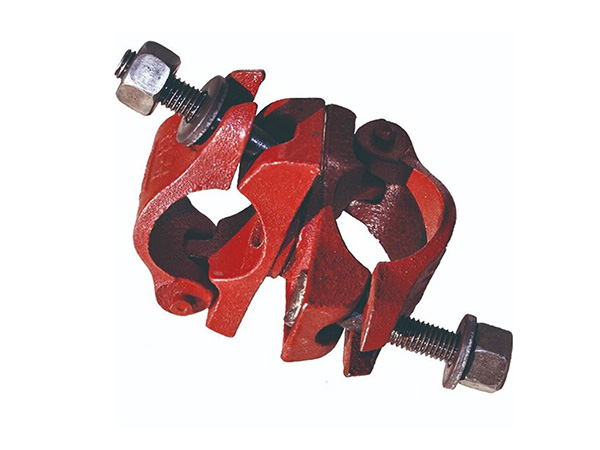
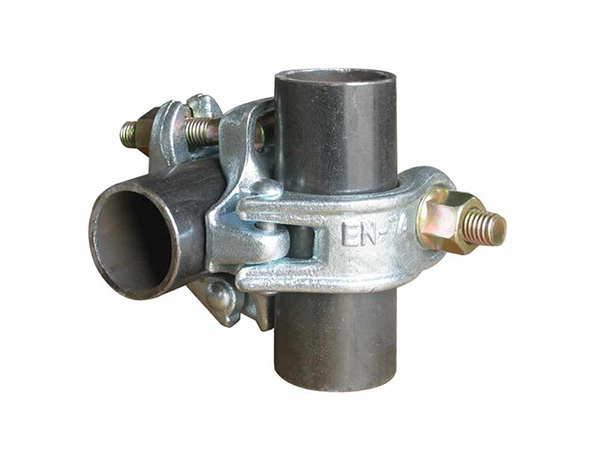
A Coupler is a mechanical connector used to join two components so that loads, motion, or forces can be transferred between them. In construction applications, couplers often connect steel tubes in scaffolding systems, while in mechanical systems they connect shafts, pipes, or rods.
Factory-produced couplers are manufactured with precision machining, heat treatment, and surface finishing to ensure stable performance. Manufacturer production ensures consistency across large batch supply, reducing variation that could cause unexpected behavior in service.
The primary function of a coupler is to maintain alignment, resist slip, and distribute loads evenly across the connection interface.
Common Cause #1: Material Defects and Poor Production Control
One of the main reasons a Coupler fails is insufficient material quality. If low-grade steel or improper heat treatment is used, the coupler may lack the tensile strength and ductility required for real-world loads.
Inconsistent factory production can lead to micro-cracks, uneven hardness, or weak threads. These defects reduce fatigue resistance and increase the risk of fracture under repeated loading.
Reliable manufacturers apply strict raw material inspection and mechanical testing during production to ensure every Coupler meets required standards before delivery.
Common Cause #2: Overloading and Misapplication
Every Coupler has a design load capacity. When the applied load exceeds this capacity, failure becomes inevitable.
Overloading can result from:
·Incorrect spacing in scaffolding systems
·Unexpected dynamic loads
·Improper design assumptions
·Combining incompatible components
Factory batch production allows standardized load ratings, but users must still select the correct Coupler for each application. Matching the coupler type and size to real engineering demands is a key step in preventing premature failure.
Common Cause #3: Installation Errors
Even a high-quality Coupler can fail if installed incorrectly.
Typical installation problems include:
·Insufficient tightening torque
·Misalignment between connected elements
·Uneven contact surfaces
·Skipping washers or locking elements
These errors create stress concentrations and reduce effective load transfer. Manufacturer production often includes dimensional accuracy, but field installation remains critical. Proper training and inspection during assembly help ensure couplers work as designed.
Common Cause #4: Fatigue and Cyclic Loading
Many Coupler applications involve repeated or fluctuating loads. Over time, cyclic stress causes microscopic cracks to grow until fracture occurs — a process known as fatigue failure.
Factory-manufactured couplers with smooth surface finishes and controlled geometry perform better under fatigue conditions. Manufacturer production techniques such as rolling threads instead of cutting them help reduce stress risers and extend service life.
Preventing fatigue failure requires both good design and regular inspection in long-term applications.
Common Cause #5: Corrosion and Environmental Exposure
Environmental conditions greatly affect Coupler performance. Moisture, chemicals, salt air, and temperature changes accelerate corrosion.
Corrosion reduces cross-sectional area, weakens threads, and increases friction, which leads to seizure or fracture.
Modern factory production includes surface treatments such as galvanizing, coating, or plating to protect the Coupler against aggressive environments. Choosing corrosion-resistant finishes is essential for outdoor and industrial projects.
Engineering Principles Behind Coupler Failure
From an engineering standpoint, Coupler failures usually involve one or more of these mechanisms:
·Tensile rupture
·Shear failure
·Slip due to insufficient friction
·Buckling under compression
·Fatigue crack propagation
Manufacturer production ensures dimensional tolerance and material properties align with these load mechanisms. Factory testing simulates working conditions to verify performance before batch supply reaches the jobsite.
How to Prevent Coupler Failures
Preventing Coupler failure requires a combination of good design, quality production, and proper use.
Key prevention strategies include:
1.Select the Right Coupler Type
Choose based on load direction, magnitude, and environment.
2.Use Factory-Produced, Tested Products
Manufacturer production ensures consistent mechanical performance.
3.Follow Proper Installation Procedures
Use correct torque and alignment practices.
4.Inspect Regularly
Look for corrosion, deformation, or looseness.
5.Avoid Overloading
Respect design limits and spacing guidelines.
By integrating these steps, projects significantly reduce the risk of coupler-related incidents.
The Role of Manufacturer and Factory Production
Professional Coupler Manufacturers and Factory Production Systems offer more than just components. They provide:
·Standardized machining
·Heat treatment control
·Surface protection processes
·Load testing
·Batch supply stability
These production advantages ensure that each Coupler performs consistently across large-scale construction and industrial applications. Factory batch supply also improves cost control and logistics efficiency for long-term projects.
Applications Where Coupler Reliability Is Critical
Coupler performance is especially important in:
·Scaffolding systems
·Structural framing
·Mechanical transmission
·Pipe connections
·Temporary support systems
·Industrial assembly lines
In all these areas, failure prevention directly affects safety, productivity, and project success.
Future Trends in Coupler Technology
As engineering standards advance, Coupler manufacturing continues to evolve. Factory production now integrates automation, digital inspection, and advanced coatings to improve precision and durability.
Future Coupler designs will focus on higher load capacity, improved corrosion resistance, and easier installation while maintaining batch supply consistency for global construction markets.
Conclusion: Build Safer Systems with Reliable Couplers
The Coupler is a small component with a big responsibility. Failures usually stem from poor material quality, overloading, incorrect installation, fatigue, and corrosion.
By choosing factory-produced couplers from reliable manufacturer production systems and applying proper engineering and maintenance practices, projects can prevent most failures before they occur.
A well-designed and well-produced Coupler not only protects structures and equipment but also improves efficiency, safety, and long-term performance across modern construction and industrial applications.
References
GB/T 7714:Liu H, Meng Y, Jia L, et al. Structural behavior of steel tube and coupler scaffolds with stability strengthening details[J]. International Journal of Steel Structures, 2018, 18(1): 79-95.
MLA:Liu, Hongbo, et al. "Structural behavior of steel tube and coupler scaffolds with stability strengthening details." International Journal of Steel Structures 18.1 (2018): 79-95.
APA: Liu, H., Meng, Y., Jia, L., Chen, Z., Liu, Q., & Wen, S. (2018). Structural behavior of steel tube and coupler scaffolds with stability strengthening details. International Journal of Steel Structures, 18(1), 79-95.

Contact Us
Tel:+86-15831733891
E-mail:yichengbuildingmaterials@gmail.com
Add:100 meters south of Weicun Village, Hechengjie Town, Xian County, Cangzhou City, Hebei Province
Url:https://www.yc-buildingmaterials.com