







- Site Navigation -
NEWS LIST
Choosing the Right Coupler for High-Load Environments
Author:yicheng Date:2025-12-23 18:11:23 Hits:112
Why Coupler Selection Matters in High-Load Environments
Selecting the right Coupler is a critical decision in high-load environments where safety, stability, and performance are non-negotiable. Whether used in construction systems, mechanical assemblies, or structural connections, a Coupler plays a vital role in transferring loads and maintaining system integrity.
In demanding applications, improper Coupler selection can lead to reduced efficiency, structural failure, or increased maintenance costs. Understanding how Couplers function under high loads—and how they are designed, produced, and tested—helps engineers and project managers make informed decisions. This guide provides a beginner-friendly yet technical overview of how to choose the right Coupler for high-load conditions.
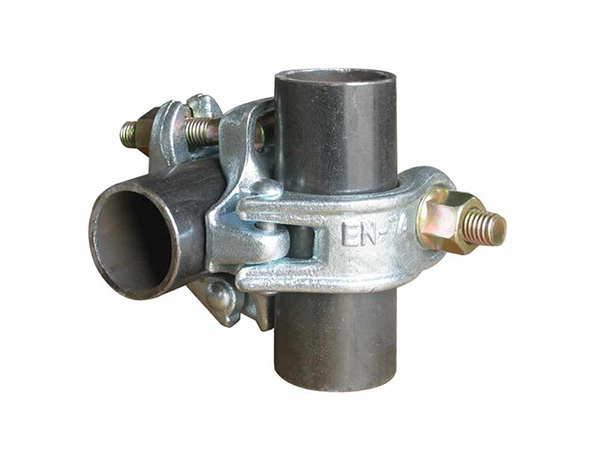
What Is a Coupler and How Does It Function?
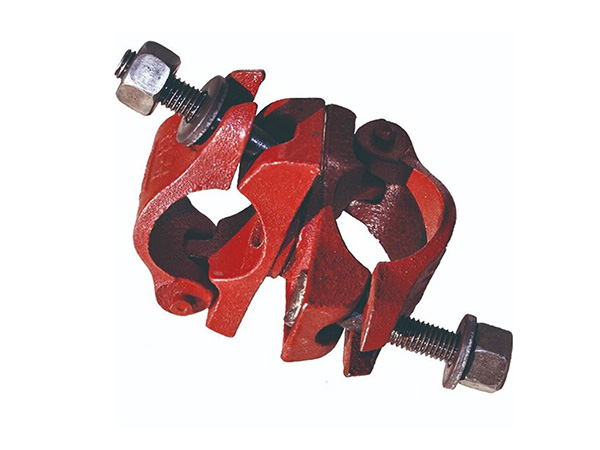
A Coupler is a mechanical or structural component used to connect two elements, enabling load transfer, alignment, or movement control. In high-load environments, Couplers are specifically designed to withstand significant tensile, compressive, or shear forces without deformation or failure.
High-load Couplers are commonly engineered with reinforced geometries, high-strength materials, and safety factors that exceed standard operating requirements. Their performance depends on both design precision and production quality.
Understanding Load Requirements
Static vs Dynamic Loads
One of the first considerations when choosing a Coupler is the type of load involved. Static loads remain constant over time, while dynamic loads fluctuate due to movement, vibration, or impact. High-load environments often involve a combination of both.
Dynamic loading places greater stress on a Coupler, making fatigue resistance and material toughness essential design considerations.
Rated Load Capacity
Every Coupler has a rated load capacity defined by testing and engineering calculations. Selecting a Coupler with adequate margin above the expected working load improves safety and extends service life.
Material Selection for High-Load Couplers
Material choice directly influences a Coupler’s performance. High-load Couplers are typically manufactured from materials known for strength and durability, such as alloy steels or heat-treated metals.
Key material properties to consider include:
·Tensile strength
·Fatigue resistance
·Corrosion resistance
·Performance under temperature variation
Consistent material quality is closely linked to controlled manufacturing and standardized production processes.
Design Features That Enhance Load Performance
Thread and Connection Geometry
For threaded Couplers, thread profile and engagement length are critical. Optimized geometry ensures even load distribution and reduces stress concentration.
Surface Treatment
Protective coatings or surface treatments help prevent corrosion, especially in harsh environments. This not only preserves structural integrity but also maintains load-bearing capacity over time.
Tolerance and Precision
High-load Couplers require precise dimensional tolerances. Even small deviations can affect load transfer efficiency, highlighting the importance of factory-level production control.
Safety Factors and Standards
In high-load environments, safety factors are essential. A Coupler should be selected based on its ultimate strength relative to the maximum expected load, accounting for uncertainties such as installation conditions or unexpected stress.
Many applications rely on standardized testing methods to verify Coupler performance. Choosing products produced under consistent manufacturing standards helps ensure compliance with safety expectations.
Installation and Maintenance Considerations
Even the best-designed Coupler can underperform if improperly installed. Correct alignment, torque application, and inspection routines are vital for long-term reliability.
High-load Couplers should also be periodically inspected for signs of wear, deformation, or corrosion. Regular maintenance reduces the risk of failure and extends operational lifespan.
Why Manufacturer Production Capability Matters
The reliability of a Coupler is closely tied to how it is made. A professional Manufacturer with organized production systems can maintain material consistency, dimensional accuracy, and repeatable performance across large batches.
For projects that require large quantities, stable bulk supply supported by structured production capacity ensures uniform quality and timely delivery. This is especially important in high-load environments where variability can compromise safety.
Common Applications of High-Load Couplers
High-load Couplers are used in a wide range of demanding applications, including:
·Structural connection systems
·Heavy-duty construction assemblies
·Industrial equipment and machinery
·Temporary and permanent load-bearing frameworks
Each application presents unique load conditions, reinforcing the need for careful Coupler selection.
Conclusion: Choosing the Right Coupler for High-Load Performance
Choosing the right Coupler for high-load environments requires careful evaluation of load conditions, material properties, design features, and production quality. A well-selected Coupler enhances safety, efficiency, and long-term performance in demanding applications.
For projects that depend on consistency and reliability, working with a Manufacturer supported by stable production and bulk supply capability is essential. By understanding how Couplers function under high loads and selecting them based on proven engineering principles, beginners and professionals alike can achieve safer and more reliable outcomes.
References
GB/T 7714:Ng P L, Guan G X, Kwan A K H. Role of reinforcement couplers in serviceability performance of concrete members[C]//IOP Conference Series: Materials Science and Engineering. IOP Publishing, 2017, 251(1): 012103.
MLA:Ng, Pui Lam, Guo-Xiu Guan, and Albert Kwok Hung Kwan. "Role of reinforcement couplers in serviceability performance of concrete members." IOP Conference Series: Materials Science and Engineering. Vol. 251. No. 1. IOP Publishing, 2017.
APA:Ng, P. L., Guan, G. X., & Kwan, A. K. H. (2017, October). Role of reinforcement couplers in serviceability performance of concrete members. In IOP Conference Series: Materials Science and Engineering (Vol. 251, No. 1, p. 012103). IOP Publishing.

Contact Us
Tel:+86-15831733891
E-mail:yichengbuildingmaterials@gmail.com
Add:100 meters south of Weicun Village, Hechengjie Town, Xian County, Cangzhou City, Hebei Province
Url:https://www.yc-buildingmaterials.com