







- Site Navigation -
NEWS LIST
How to Test Coupler Quality: 5 Essential Standards for Reliable Performance
Author:yicheng Date:2025-10-22 10:15:22 Hits:128
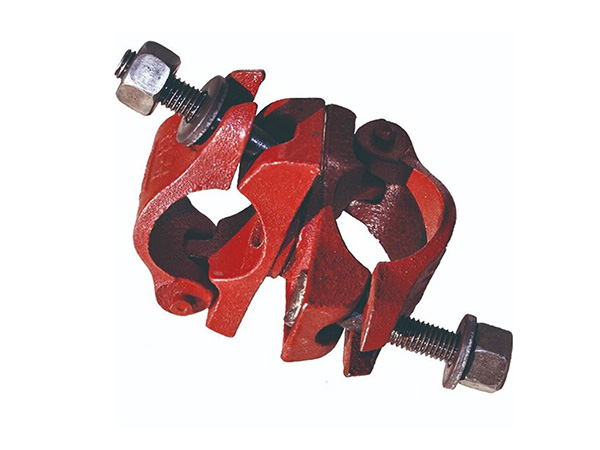
In every reinforced concrete project, the Coupler is a small but vital component that holds enormous responsibility. It connects two rebars end-to-end, maintaining load continuity and structural integrity.
When these mechanical connectors fail, the entire system’s strength can be compromised. That’s why testing coupler quality according to recognized international standards is crucial for both safety and efficiency.
Many China Coupler manufacturers today operate advanced facilities equipped with precision testing systems and offer bulk coupler supply that meets strict ISO and ASTM requirements. Understanding these key tests helps engineers and contractors ensure that every connection is trustworthy.
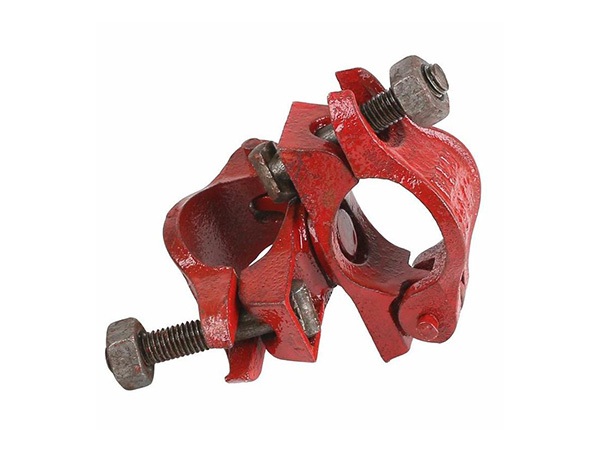
1. Tensile Strength Verification (ISO 15835, ACI 349)
The tensile strength test confirms that a Coupler can bear the same or greater tension as the reinforcing bar itself. This test is often performed according to ISO 15835 or ACI 349, ensuring the coupler joint can withstand high stress without failure.
During the process:
·A sample assembly is pulled until fracture occurs.
·The bar should break outside the coupler, not at the connection point.
·The measured load must equal or exceed the rebar’s nominal tensile capacity.
China factory manufacturers commonly use hydraulic testing machines and digital load measurement systems for precise and repeatable results. Verified bulk coupler batches are accompanied by tensile certificates to guarantee consistency.
2. Slip Test (BS 8110, EN 1992-1-1)
The Slip Test evaluates how firmly the Coupler holds under axial loads. Excessive slip between connected bars can cause cracks, misalignment, and performance loss in reinforced structures.
International codes like BS 8110 and EN 1992 specify maximum allowable slip values:
·Less than 0.1 mm under service load
·Less than 0.3 mm under ultimate load
This ensures that the connection behaves as a continuous bar.
Modern China Coupler factories conduct slip tests as part of batch inspection, confirming the coupler’s internal threading precision and frictional resistance — key factors for safe construction.
3. Fatigue Resistance Evaluation (ASTM A970, ISO 15630)
For bridges, tunnels, and high-rise projects, fatigue testing is essential. This process simulates repeated stress cycles that couplers endure throughout a structure’s lifespan.
According to ASTM A970 and ISO 15630, couplers should resist at least two million cycles at a defined stress range without cracking or loosening.
Testing is conducted on servo-controlled fatigue machines that mimic real-life loading conditions.
China suppliers specializing in coupler production invest heavily in automated fatigue-testing equipment, ensuring every bulk batch meets long-term durability requirements for dynamic structures.
4. Thread Accuracy and Torque Testing
Because most mechanical Couplers rely on threaded engagement, precision threading is critical. A minor deviation can lead to poor alignment or slippage under stress.
Testing typically includes:
·Thread gauge inspection to check pitch, tolerance, and depth.
·Torque testing to verify required tightening levels.
·Visual and magnetic particle inspection to detect defects or surface damage.
With the help of CNC machining and digital thread calibration, China factory manufacturers can produce thousands of perfectly matched units, ready for bulk export while maintaining dimensional uniformity across production batches.
5. Bend and Impact Testing (ISO 15630-1)
The Bend Test evaluates a Coupler’s performance when subjected to angular stress or rebar bending. It ensures that the joint maintains integrity when rebar is curved or repositioned during construction.
A typical test bends the rebar-coupler assembly to a specific degree (often 30°–45°), observing for cracks, deformation, or thread slippage.
Complementary Impact Tests expose the joint to sudden force loads, simulating conditions like vibration, seismic movement, or accidental impact.
These two evaluations confirm the ductility and toughness of the coupler material — essential for structures exposed to dynamic environments.
Most China manufacturers carry out these tests as part of their internal quality control before releasing products for bulk shipment.
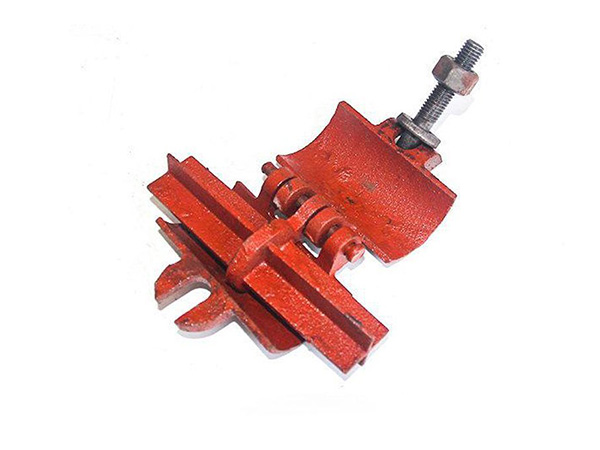
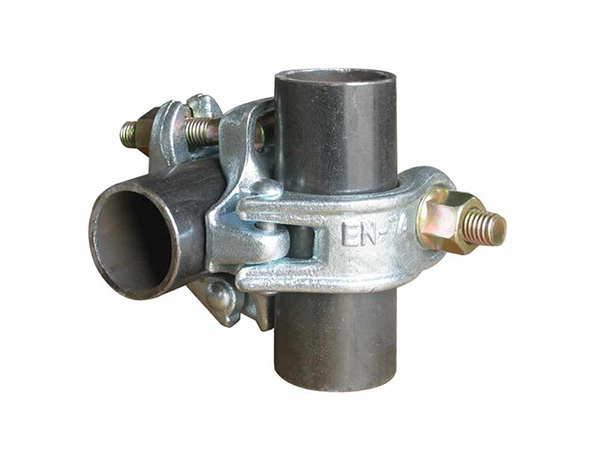
Additional Factory-Level Quality Checks
High-quality coupler production also includes other assessments:
·Chemical composition analysis to ensure the use of certified alloy steels (like 45# or 40Cr).
·Hardness and surface treatment checks to confirm corrosion protection.
·Batch traceability and coding for product tracking and inspection records.
Leading China Coupler suppliers provide detailed inspection reports with each bulk supply order, including mechanical and dimensional data. This transparency reassures global buyers of consistent performance and compliance.
Why Testing Standards Matter
Consistent testing according to international standards isn’t just about passing inspections — it builds confidence in the entire structural system.
Engineers can design with precision, contractors can assemble faster, and clients can trust that safety won’t be compromised.
By adhering to ISO, ASTM, and BS standards, manufacturers maintain repeatable quality, ensuring every Coupler performs to the same standard, no matter where it’s installed.
Choosing Reliable China Manufacturers
Partnering with a China Coupler factory offers several advantages:
·Integrated production and testing facilities
·Bulk supply capacity with stable lead times
·Competitive pricing without compromising quality
·Full compliance with global testing standards
These China suppliers not only meet but often exceed international expectations. Their efficient mass-production systems, strict inspection routines, and robust documentation make them dependable partners for global infrastructure and construction companies.
Conclusion
Testing is the foundation of coupler reliability. Each Coupler must undergo tensile, slip, fatigue, torque, and bend testing to confirm that it can safely transfer loads and resist failure in demanding environments.
By sourcing from a China factory manufacturer offering bulk coupler supply, you gain access to precision-engineered, thoroughly tested products that comply with global standards — ensuring safer, stronger, and more efficient construction outcomes.
In today’s competitive market, a well-tested Coupler isn’t just a component — it’s a symbol of engineering integrity and quality craftsmanship from trusted China suppliers.
References
GB/T 7714:Jacinto J M, Rabago F P C, Bolivar III A D, et al. Mechanical coupler as an alternative rebar splicing: A review[C]//International Conference on Geosynthetics and Environmental Engineering. Singapore: Springer Nature Singapore, 2023: 101-111.
MLA:Jacinto, Jhun M., et al. "Mechanical coupler as an alternative rebar splicing: A review." International Conference on Geosynthetics and Environmental Engineering. Singapore: Springer Nature Singapore, 2023.
APA:Jacinto, J. M., Rabago, F. P. C., Bolivar III, A. D., Tombado, E. D., & Dela Cruz, O. G. (2023, March). Mechanical coupler as an alternative rebar splicing: A review. In International Conference on Geosynthetics and Environmental Engineering (pp. 101-111). Singapore: Springer Nature Singapore.

Contact Us
Tel:+86-15831733891
E-mail:yichengbuildingmaterials@gmail.com
Add:100 meters south of Weicun Village, Hechengjie Town, Xian County, Cangzhou City, Hebei Province
Url:https://www.yc-buildingmaterials.com