







- Site Navigation -
NEWS LIST
Post-Pour Strip Steel Support in Concrete Construction
Author:yicheng Date:2026-07-14 14:16:03 Hits:169

Post-pour strip steel supports are specialized falsework components designed to carry loads on one or both sides of a concrete strip before, during, and after the structural pour. In beam-and-slab systems, post-pour strips—the narrow sections of concrete cast after the main slab—are particularly vulnerable to differential deflection and cracking if the temporary supports beneath them are not properly detailed and executed. Post-pour strip steel supports address this challenge by providing a calibrated, adjustable load-bearing system that contractors can set to exact heights and monitor throughout the critical curing period. For engineers and site managers working with post-pour construction sequences, understanding these systems is essential to delivering crack-free concrete structures.
Types of Post-Pour Strip Supports
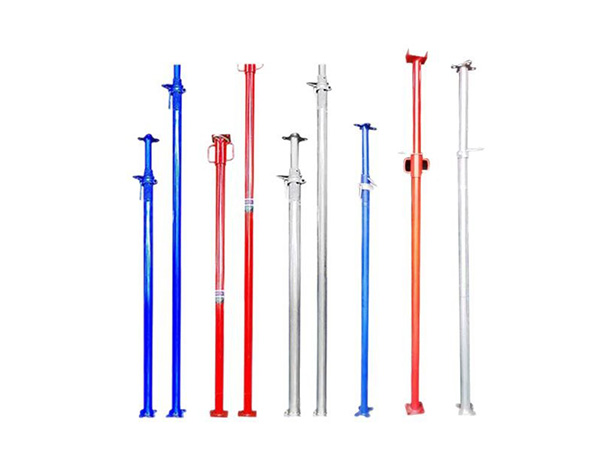
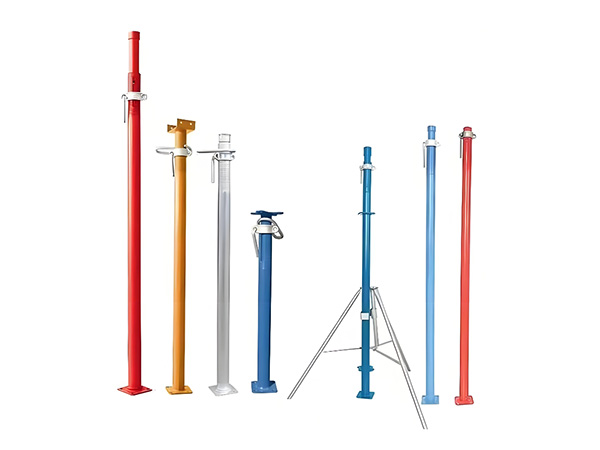
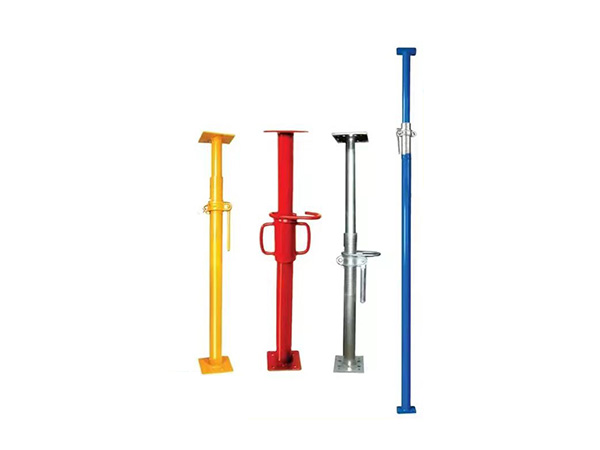
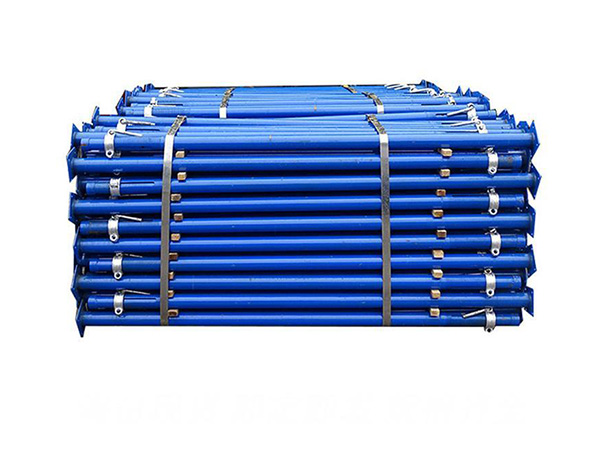
Steel supports used in post-pour applications come in several configurations, with adjustable steel props among the most common. An adjustable steel prop consists of a steel tube with an internal threaded sleeve that allows the overall length to be fine-tuned on site. This adjustability is critical for post-pour work, where the support must reach exactly the required elevation and then be incrementally unloaded as the concrete gains strength and takes over the load-carrying role.
Fixed-length steel chocks or plates are used in combination with adjustable props to achieve precise bearing heights. Some projects use purpose-made post-pour strip frames—fabricated steel assemblies designed to fit the exact geometry of the strip and transfer loads to the primary slab or ground below. The choice of support type depends on the strip width, the calculated loads, and the site conditions. A steel support factory producing these components typically offers a range of capacities and adjustment ranges to cover most project requirements without custom fabrication.
Applications in Beam and Slab Construction
In a typical post-pour strip application, the main slab has been cast and cured to sufficient strength, and the props supporting it have been removed or lowered in a planned striking sequence. The post-pour strip sits between two completed slab sections or between a slab and a beam web. Until that strip concrete hardens, the strip is essentially a gap that transfers load unevenly to the adjacent members. If the temporary supports beneath the strip deflect or settle, the strip concrete cracks—usually at the interface with the already-hardened slab—because the green concrete has little tensile strength to resist the differential movement.
Placing properly specified steel supports beneath the post-pour strip before casting maintains the alignment and load-carrying capacity at that interface. The supports remain in place until the strip concrete has reached a defined strength—typically specified by the structural engineer—and are then carefully released in a controlled sequence. This approach eliminates the differential deflection that causes cracking and produces a monolithic, crack-free interface between the strip and the main slab.
Selection and Engineering Considerations
Choosing the right post-pour strip support system begins with understanding the loads involved. The dead weight of the wet concrete in the strip is straightforward to calculate, but the construction live loads—formwork panels, workers, equipment—must also be accounted for. The stiffness of the support is as important as its load capacity: a support that deflects significantly under load defeats the purpose of the post-pour strip system. Engineers typically specify supports with known stiffness characteristics and may require pre-compression or jacking to eliminate gaps before loading.
The interface between the support and the concrete surface below requires attention. Point loads on a concrete slab or another hardened concrete member can cause local crushing or spalling if the bearing area is too small. Steel bearing plates distribute the load over a sufficient area to protect the underlying concrete. A knowledgeable steel support supplier will be able to advise on appropriate plate sizes and bearing arrangements for the specific project conditions.
Quality Control and Inspection
As with all temporary works components, post-pour strip supports must be inspected before use and at regular intervals during the pour and curing period. Props should be plumb, bearing plates should be fully seated, and adjustment mechanisms should be locked off or pinned to prevent movement after loading. Any damaged or severely corroded supports should be replaced rather than repaired on site.
For projects with tight post-pour sequences, having a reliable supply of spare supports from the original manufacturer avoids delays when replacements are needed. Documentation of support capacities, test certificates, and installation drawings should be available on request from any reputable supplier, supporting the quality assurance records that most construction projects are required to maintain.
Join Our Global Distributor Network
References
ACI Committee 318. (2019). Building Code Requirements for Structural Concrete and Commentary (ACI 318-19). American Concrete Institute.
British Standards Institution. (2008). BS 5975: Code of Practice for Temporary Works Procedures and the Permissible Stress Design of Falsework. BSI.
Beeby, A. W., & Narayanan, R. S. (2018). Designers' Guide to EN 1992-1-1 and EN 1992-1-2: Eurocode 2: Design of Concrete Structures (2nd ed.). ICE Publishing.

Contact Us
Tel:+86-15831733891
E-mail:yichengbuildingmaterials@gmail.com
Add:100 meters south of Weicun Village, Hechengjie Town, Xian County, Cangzhou City, Hebei Province
Url:https://www.yc-buildingmaterials.com