







- Site Navigation -
NEWS LIST
Practical Applications of Steel Support in Modern Tunnel Construction
Author:yicheng Date:2025-10-26 12:38:40 Hits:72
Why Steel Support Matters Underground
In underground engineering, Steel Support acts as the structural skeleton that holds tunnels steady during and after excavation. As earth pressure and rock stress shift during construction, a reliable support system becomes essential to prevent collapse, surface deformation, or cracks in the surrounding strata.
Among all reinforcement materials, steel has earned its place as the most dependable choice. Its strength, flexibility, and adaptability allow engineers to work confidently even in unpredictable geological formations. From highway tunnels to deep metro lines, Steel Support provides the backbone for every safe and durable project.
Understanding the Function of Steel Support
When a tunnel is excavated, the natural stress equilibrium within surrounding rock is disturbed. This creates zones of tension and compression that can cause instability. Steel Support restores balance by redistributing these loads and providing a temporary—or sometimes permanent—skeleton that resists deformation.
Key functions include:
·Holding the rock mass in position immediately after excavation.
·Transferring load pressure uniformly to reduce localized failure.
·Reinforcing weak zones such as fractured or weathered rock layers.
·Serving as a framework for secondary linings like concrete or shotcrete.
These combined actions make steel reinforcement the heart of safe tunnel engineering.
Types of Steel Support Used in Tunnel Projects
1. Steel Arches (Ribs)
Segmental steel arches are widely used in weak ground conditions. They quickly stabilize the excavation face and create a rigid frame that resists deformation. Their curved profile evenly distributes rock pressure along the tunnel perimeter.
2. Steel Mesh and Reinforcing Bars
These are often paired with sprayed concrete. Steel mesh provides surface stability and prevents rock fragments from falling, while rebar adds internal strength and enhances the overall rigidity of the lining.
3. H-Beams and Lattice Girders
For large tunnels or those passing through fault zones, H-beams and lattice girders offer excellent load-bearing capacity and adaptability. Their modular design makes them easy to assemble and adjust in complex spaces.
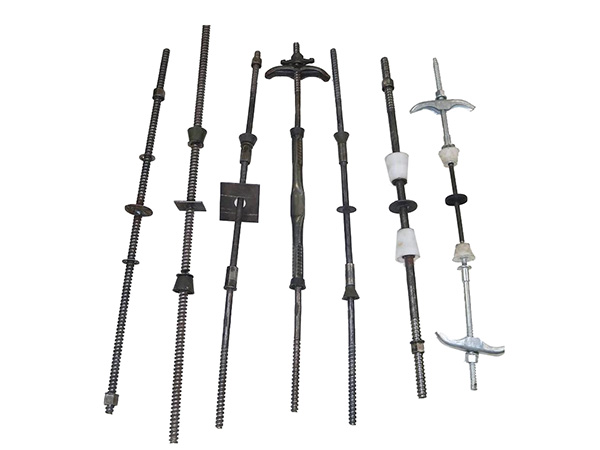
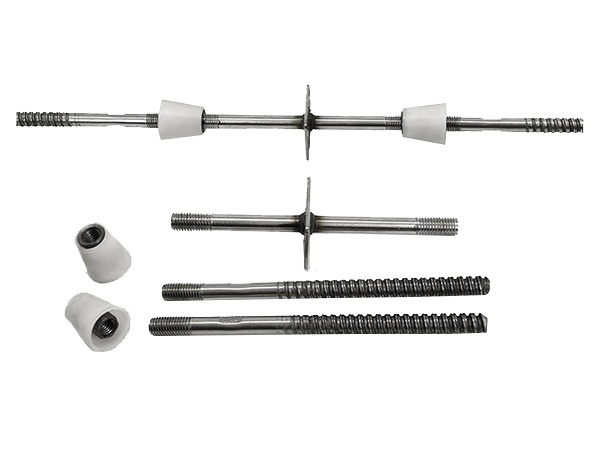
4. Rock Bolts and Anchors
These provide localized support by anchoring loose rock to the stable surrounding mass. They work in conjunction with steel frames and shotcrete to form an integrated support system.
Advantages of Using Steel Support
Superior Strength and Elasticity
Steel structures can handle high compressive and tensile forces. Their elasticity allows for controlled deformation, helping tunnels adapt to ground movement without losing integrity.
Adjustable and Versatile
Unlike rigid concrete, steel supports can be reshaped or repositioned as excavation progresses. This flexibility ensures safe progress even in changing geological conditions.
Quick Assembly and Reuse Potential
Prefabricated sections allow fast on-site installation. Some components can even be dismantled and reused in temporary projects, minimizing material waste and reducing costs.
Compatibility with NATM and Modern Methods
The New Austrian Tunneling Method (NATM) and similar techniques rely on adaptable support systems. Steel easily integrates with these methods, allowing engineers to modify support based on real-time ground monitoring.
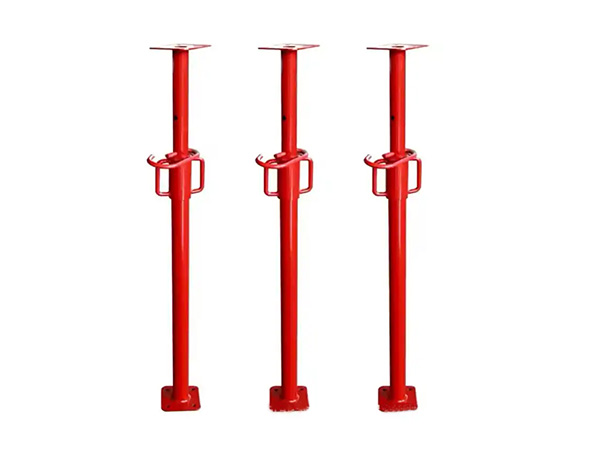
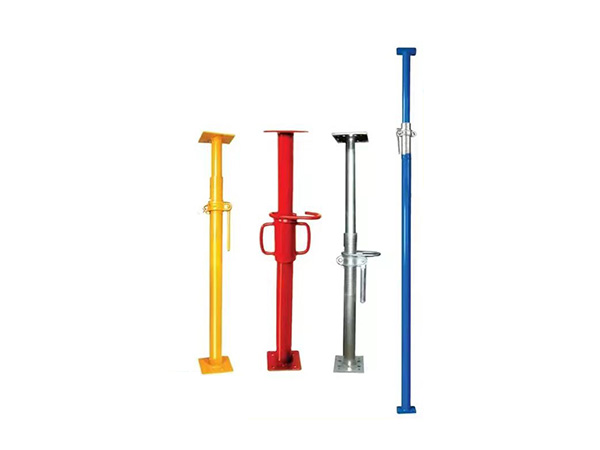
Why Choose China Manufacturers for Steel Support
In recent years, China manufacturers have become global leaders in supplying Steel Support systems for large infrastructure projects. Their expertise in metallurgy, automated fabrication, and quality assurance ensures that each component meets international safety standards.
The main advantages include:
·Direct factory bulk supply, ensuring consistent quality and cost control for large-scale tunnel projects.
·Tailor-made specifications, allowing customers to choose sizes, steel grades, and coatings suited to their conditions.
·Strict quality certification, including ISO, CE, and third-party testing for mechanical performance.
Working with China suppliers allows project managers to combine affordability with reliability — a key advantage for major public works or private infrastructure developments.
Installation and Maintenance Guidelines
To ensure optimal performance of Steel Support, engineers must follow sound installation practices:
1.Survey and classify geological conditions before determining support type and spacing.
2.Preassemble frames to ensure accurate alignment during installation.
3.Use anti-corrosion coatings or galvanized steel in humid or acidic tunnels.
4.Regularly inspect welds and joints for cracks, fatigue, or misalignment.
5.Integrate with anchors or shotcrete layers in unstable ground zones.
Consistent monitoring and timely maintenance are key to extending service life and preventing costly structural issues.
Environmental and Safety Benefits
Beyond strength, Steel Support contributes to sustainable and safer tunnel construction. Its ability to control deformation reduces the likelihood of collapse, protecting workers and equipment. Additionally, steel components can be recycled after project completion, minimizing waste and environmental footprint.
Modern projects increasingly favor eco-friendly materials and reusable systems — areas where steel clearly excels compared to traditional concrete-only reinforcement.
Conclusion: Building Stability That Lasts
Every tunnel’s longevity depends on the invisible framework that supports it. Steel Support ensures structural integrity from the moment of excavation to the final lining stage. Its mechanical strength, adjustability, and rapid installation make it indispensable for safe and efficient construction.
By sourcing from trusted China manufacturers offering direct bulk supply, contractors gain access to high-performance materials at competitive prices, ensuring reliable delivery for even the most complex tunnel projects.
In short, the strength of a tunnel lies not only in its design but in the durability of its Steel Support — the true foundation of modern underground engineering.
References
GB/T 7714:Bednarek Ł, Małkowski P, Niedbalski Z, et al. Steel arch and rock bolt support in terms of the Gateroad stability maintaining behind the longwall face[J]. Applied Sciences, 2024, 14(9): 3594.
MLA:Bednarek, Łukasz, et al. "Steel arch and rock bolt support in terms of the Gateroad stability maintaining behind the longwall face." Applied Sciences 14.9 (2024): 3594.
APA:Bednarek, Ł., Małkowski, P., Niedbalski, Z., & Mucha, K. (2024). Steel arch and rock bolt support in terms of the Gateroad stability maintaining behind the longwall face. Applied Sciences, 14(9), 3594.

Contact Us
Tel:+86-15831733891
E-mail:yichengbuildingmaterials@gmail.com
Add:100 meters south of Weicun Village, Hechengjie Town, Xian County, Cangzhou City, Hebei Province
Url:https://www.yc-buildingmaterials.com