







- Site Navigation -
NEWS LIST
What Is an Adjustable Screw Jack and How It Works
Author:yicheng Date:2025-12-06 19:01:10 Hits:139
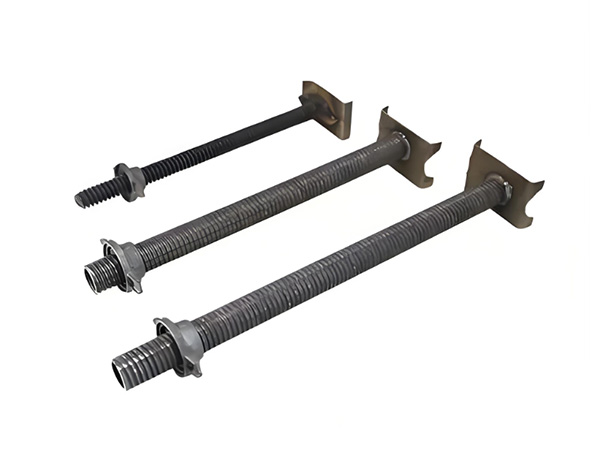
In many construction environments, the Adjustable Screw Jack plays a critical role in providing temporary yet highly dependable support. Whether used beneath scaffolding frames, formwork systems, or load-bearing beams, this adjustable support tool allows workers to fine-tune height levels and maintain structural stability. Selecting a model from a professional Manufacturer with consistent Production output ensures durability, precision, and safety across multiple projects.
Understanding the Adjustable Screw Jack
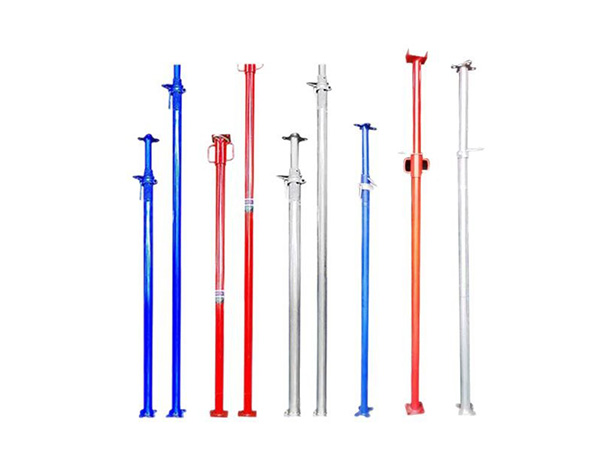
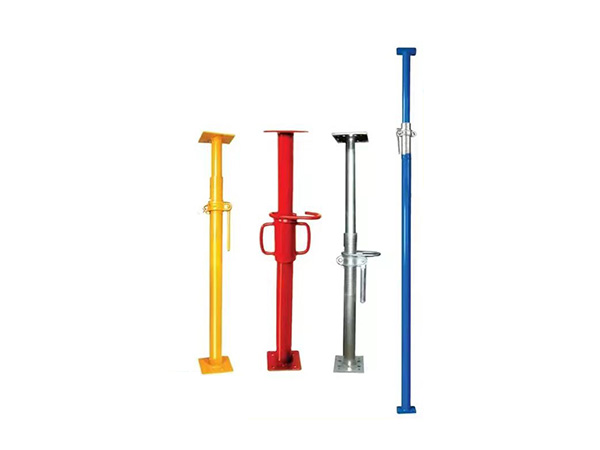
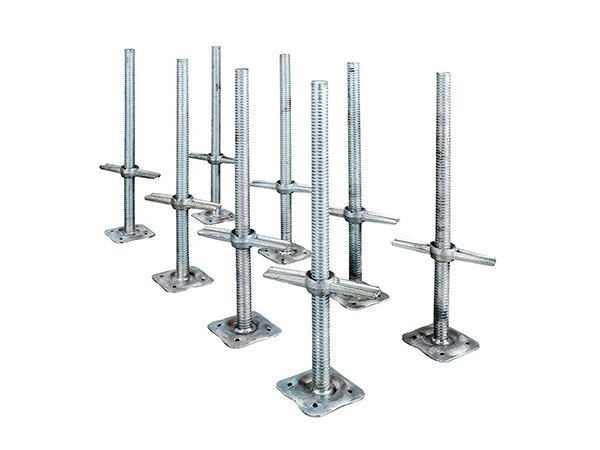
At its core, an Adjustable Screw Jack is a vertically adjustable support component commonly made of high-strength steel. It typically includes:
·A heavy-duty base plate
·A threaded steel screw
·A handle or nut for height adjustment
·A top plate or U-head to hold beams or pipes
By turning the threaded screw, workers can raise or lower the jack to match the height needed for various site conditions.
How the Adjustable Screw Jack Operates
The operating mechanism is based on the principle of threaded mechanical lifting. Its functionality can be summarized as follows:
1. Rotational Movement Creates Vertical Adjustment
Turning the screw translates rotational force into upward or downward motion, allowing for precise height alignment.
2. Millimeter-Level Control
The fine pitch of the thread enables small, accurate movements—an essential feature when leveling uneven ground or adjusting formwork.
3. Improved Load Distribution
The top plate spreads pressure across a larger area, helping maintain stability under heavy loads.
4. Stable Ground Support
The base plate keeps the jack from shifting or sinking, even when placed on compacted soil or concrete surfaces.
This simple yet effective mechanism is why Adjustable Screw Jacks remain fundamental to construction workflows.
Types of Adjustable Screw Jacks
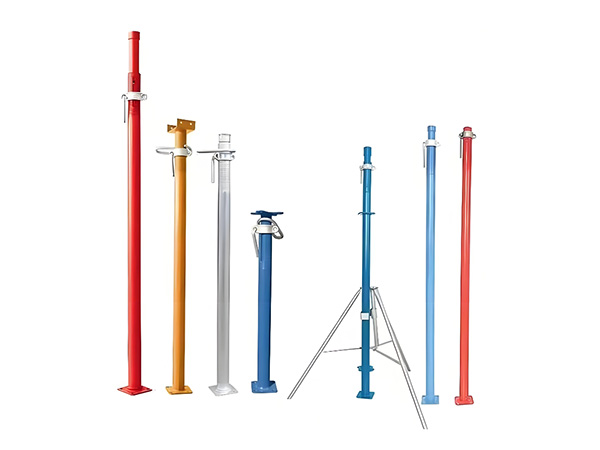
Different construction tasks require different jack configurations. The most common types include:
1. Base Jack
Designed for the bottom of scaffolding systems, providing foundational height control.
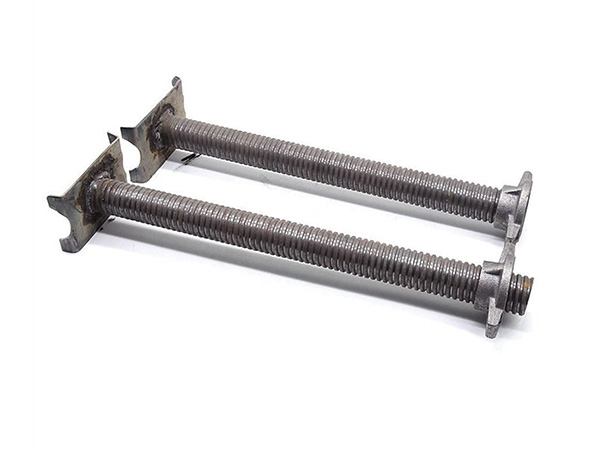
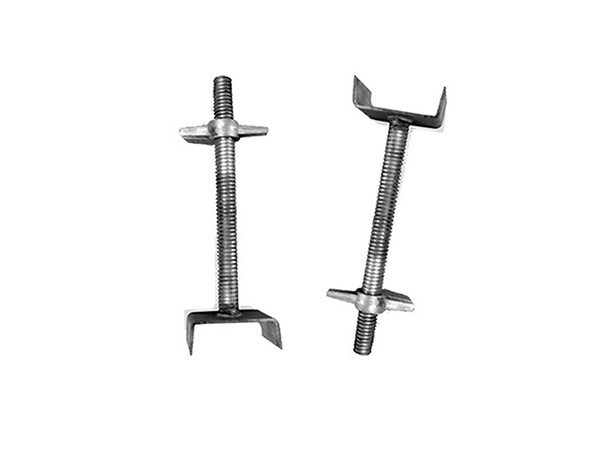
2. U-Head Jack
Popular in formwork and beam support applications due to its ability to secure horizontal components.
3. Swivel Head Jack
Includes an adjustable top plate that can pivot to match angled or sloped surfaces.
4. Heavy-Duty Screw Jack
Built for projects with high load-bearing requirements, such as bridge work or deep foundation support.
These variations allow Adjustable Screw Jacks to adapt to a wide range of construction settings.
Why Adjustable Screw Jacks Are Essential in Construction
1. Fine-Level Adjustability
They enable workers to achieve exact height alignment even when surface conditions vary.
2. Enhanced Safety
A stable support system reduces risks associated with shifting loads, uneven structures, and unsafe elevations.
3. High Durability
Quality models are manufactured with corrosion protection and high-strength steel, making them suitable for long-term reuse.
4. Strong Load Capacity
Threaded mechanical movement distributes stress efficiently, allowing the jack to support significant weight.
5. Broad System Compatibility
They integrate well with most scaffolding and formwork brands, making them a versatile tool across projects.
How to Choose the Right Adjustable Screw Jack
1. Evaluate the Steel Quality and Thread Precision
Better threading means smoother adjustment and greater structural reliability.
2. Know Your Load Requirements
Matching the jack to the expected load ensures safety and performance.
3. Look for Corrosion-Resistant Finishing
Galvanized or powder-coated models last longer in wet or outdoor conditions.
4. Prefer Manufacturers With Consistent Production Capacity
A stable supply chain avoids delays during large-scale projects.
5. Confirm System Compatibility
Top heads (flat or U-shaped) should fit with your existing scaffolding or formwork structures.
Safety and Installation Best Practices
To use Adjustable Screw Jacks correctly:
·Place them on firm, level ground
·Avoid stacking makeshift materials under the base
·Inspect threads for wear and damage before use
·Ensure the adjustment nut is tightened after leveling
·Never exceed the rated load capacity
·Keep the threads clean and free of debris
Following these guidelines extends the lifespan of the jack and maintains safety on-site.
Final Thoughts: A Reliable Adjustable Screw Jack Improves Project Safety and Efficiency
From supporting formwork to stabilizing scaffolding, the Adjustable Screw Jack remains one of the most versatile and dependable tools in construction. Its fine adjustment capabilities and robust structure help maintain accurate positioning and consistent safety throughout the building process.
Choosing an Adjustable Screw Jack from a capable Manufacturer with strong Production performance ensures the device meets high standards of strength, precision, and durability. With the right equipment, construction teams can achieve safer operations and more efficient workflows.
References
GB/T 7714:Noormohamed A, Mercan O, Ashasi-Sorkhabi A. Optimal active control of structures using a screw jack device and open-loop linear quadratic gaussian controller[J]. Frontiers in Built Environment, 2019, 5: 43.
MLA:Noormohamed, Ali, Oya Mercan, and Ali Ashasi-Sorkhabi. "Optimal active control of structures using a screw jack device and open-loop linear quadratic gaussian controller." Frontiers in Built Environment 5 (2019): 43.
APA:Noormohamed, A., Mercan, O., & Ashasi-Sorkhabi, A. (2019). Optimal active control of structures using a screw jack device and open-loop linear quadratic gaussian controller. Frontiers in Built Environment, 5, 43.

Contact Us
Tel:+86-15831733891
E-mail:yichengbuildingmaterials@gmail.com
Add:100 meters south of Weicun Village, Hechengjie Town, Xian County, Cangzhou City, Hebei Province
Url:https://www.yc-buildingmaterials.com